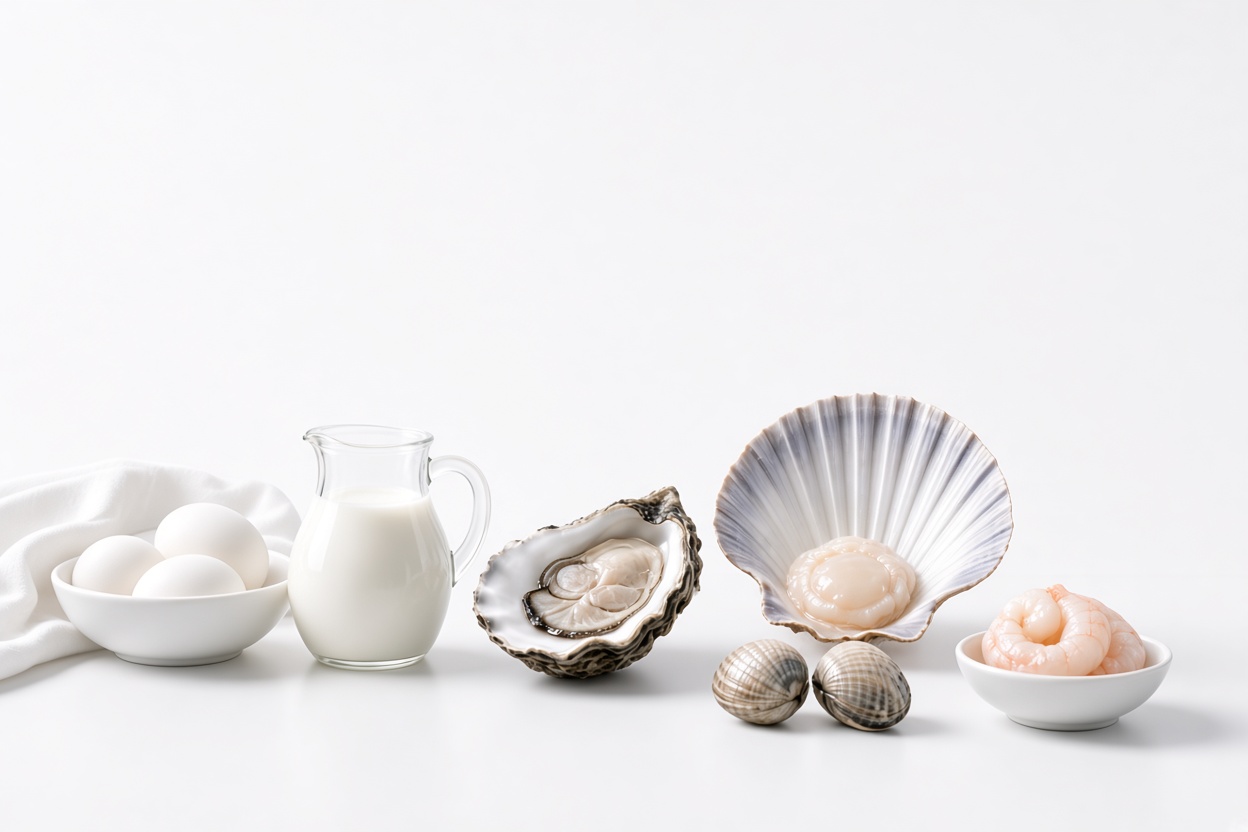
From 13 September 2026, the import into the European Union of certain dairy preparations, fishery products and molluscs will be subject to new health conditions. Commission Delegated Regulation (EU) 2026/1304 expands the customs codes concerned and strengthens the requirements relating to the country of origin, authorised establishments, residue controls and official certificates, introducing new requirements for importing dairy and fishery products into the EU.
Importers, manufacturers, customs representatives and logistics operators will therefore need to review each product before it is dispatched. This article explains which goods are affected, which exceptions may apply and what documents should be checked to reduce the risk of a consignment being held at the border.
What changes under Delegated Regulation (EU) 2026/1304?
The new Regulation amends Commission Delegated Regulation (EU) 2022/2292, which supplements the official controls system established by Regulation (EU) 2017/625. More specifically, the changes focus on five main areas:
- The list of customs codes covered by the entry conditions has been extended.
- New product categories must come from authorised countries.
- Certain products are now included in the rules on residues and contaminants.
- The requirements concerning authorised establishments and official certificates have been extended.
- Certain molluscs and other marine invertebrates are excluded from additional residue monitoring plans. However, this exception does not apply to certain forms of land-based aquaculture production.
| Information | What it means for businesses |
|---|---|
| Date of entry into force | The new conditions apply from 13 September 2026. |
| Products affected | Certain dairy and fishery preparations, including some goods classified under headings 2103 and 2106, as well as certain molluscs and other marine invertebrates. |
| Main checks | CN code, health origin, country authorisation, establishments, residues and official certificate. |
| Main risk | The consignment may fail border controls because of a material or documentary inconsistency. |
| Recommended action | Review product catalogues, suppliers and certificate templates before dispatch. |
The purpose of the reform is to ensure that comparable products are subject to comparable health guarantees, even when they are marketed as sauces, mixtures or other food preparations.
Summary of the new obligations
The reform does not create an entirely new import system. Instead, it extends several existing obligations to new product categories. In practical terms, this means that an operation previously handled with a particular set of documents may require additional checks from September 2026 onwards.
| Area | Previous situation | From 13 September 2026 |
| Customs codes | Some dairy or fishery preparations were not consistently included in all the relevant provisions. | Certain goods are added, with particular attention to preparations classified under headings 2103 and 2106. |
| Authorised country or region | The requirement did not apply in the same way to all preparations. | The new categories must come from a country or region authorised for the specific product. |
| Establishments | Some preparations were not consistently covered by the establishment-listing requirements. | The obligation to use authorised plants, vessels or storage facilities is extended where applicable. |
| Residues | Monitoring plans did not cover all categories in the same way. | Guarantees relating to veterinary medicinal products, contaminants and pesticide residues are extended. |
| Certification | Some goods were not subject to official certification requirements. | Additional product categories must be accompanied by the relevant official certificate. |
| Molluscs and other invertebrates | The exception concerning certain residue monitoring plans had a more limited scope. | The exception is extended, but not to animals reared in certain land-based facilities. |
Consequently, it is not enough to check whether a product has been imported in the past. Businesses must also determine whether the reform has changed the legal treatment of its customs code, product category or production method.
Which products are affected by the new health requirements?
The Regulation does not apply to all food products or to every dairy product, fishery product or mollusc. Whether the new requirements apply will depend on the composition of the product, its manufacturing process, its commercial presentation and its customs classification.
Food preparations containing dairy products
The reform covers certain preparations containing dairy products that were not previously listed. However, the mere presence of milk, whey, butter or milk powder does not automatically mean that the product will be subject to all the new requirements. First, it is necessary to determine whether the goods qualify as a product of animal origin, a composite product or another type of food preparation. In addition, the role of the dairy ingredient and the treatment it has undergone must be examined.
💡 For example, a ready-to-eat dairy product should not be assessed in the same way as a food preparation consisting mainly of plant-based ingredients and only a small proportion of dairy product.
Preparations containing fishery products
The changes also affect certain goods classified under HS headings 2103 and 2106. Heading 2103 includes, among other products, certain sauces, preparations for sauces and condiments. Nevertheless, this does not mean that every product classified under this heading will be treated as a fishery product. The question is whether the goods contain a preparation of animal origin based on fishery products.
💡 For instance, certain sauces, extracts or mixtures with a fishery base may be affected. A sauce containing fish extract, a seasoned paste with a fishery base or a food mixture containing fish proteins may therefore require a different assessment from a fully plant-based sauce, even if both products fall under the same general customs heading.
Molluscs and other marine invertebrates
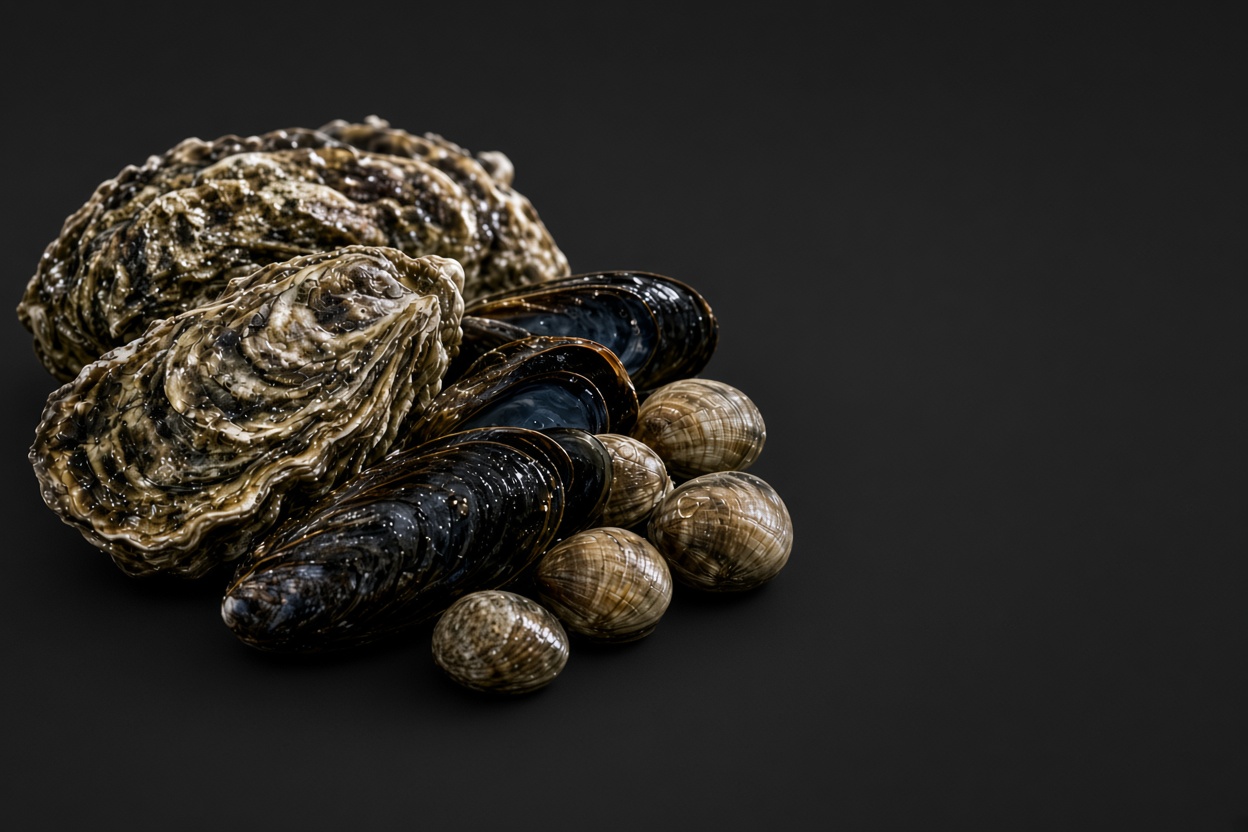
The Regulation also concerns bivalve molluscs, echinoderms, tunicates and marine gastropods, whether they are live, chilled, frozen or processed. In this category, the production method is particularly important. It must be determined whether the animals were harvested or reared in the marine environment or whether they came from a land-based aquaculture facility. As explained below, this distinction will determine whether the exception relating to certain residue requirements may apply.
How can you determine whether a product is covered?
As a first step, it is advisable to answer the following five questions in order.
1. What does the product actually contain?
The recipe, technical data sheet and percentage of ingredients of animal origin should be reviewed carefully. A general description such as “Asian sauce”, “protein mixture” or “nutritional preparation” may conceal the presence of fish, milk powder, whey or other relevant ingredients from a regulatory perspective. It is also important to understand the role played by each ingredient. A main component is not necessarily treated in the same way as an ingredient used in a very small proportion. This information may influence both the customs classification and the applicable health requirements.
2. What is the correct CN or HS code?
To determine the correct code, it is necessary to consider the product’s composition, manufacturing process, commercial presentation, packaging, intended use for human consumption and the rules of the Combined Nomenclature. Where there is significant uncertainty, the importer may consider applying for Binding Tariff Information. We advise importing and exporting companies on Customs Law, including the review of customs codes and international trade documents.
3. Is it a product of animal origin or a composite product?
A composite product combines ingredients of plant origin with processed products of animal origin. This classification may affect the controls and entry conditions applicable to the dairy or fishery component. Therefore, it is necessary to determine whether the ingredients of animal origin have already been processed, how they are incorporated into the product and what treatment is applied to the final preparation.
4. What is the health origin of the ingredients?
The country from which the goods are dispatched is not always the same country in which the ingredient of animal origin was obtained or processed. For example, a food preparation may be manufactured in one country using milk powder or fish originating from another. Where necessary, the review must therefore reconstruct the entire supply chain. Moreover, health origin must not be confused with customs or preferential origin. A product may comply with the rules required to benefit from a tariff reduction while still failing to meet the health conditions for entry into the European Union. Further information is available in our guide on how to prove preferential origin.
5. Which establishments have been involved?
The supplier issuing the invoice may not be the same company as the manufacturing plant, cold storage facility, freezer vessel or establishment that processed the ingredient of animal origin. For this reason, the checks should not be limited to the final seller. Where the relevant product category is subject to listing requirements, all the facilities involved must be identified. It must then be verified that their authorised activities correspond to the operations they actually performed.
Checks to be carried out before dispatch
Once the product has been correctly identified, the business can review the applicable conditions for entry into the European Union. Our guide on how to import goods into Belgium from outside the European Union provides a general overview of the customs and commercial documents normally required.
Check whether the country or region is authorised
The first step is to confirm whether the third country or region is authorised to export the specific product category to the European Union. This authorisation is not general. In other words, the fact that a country is authorised to export certain fishery products does not necessarily mean that it is also authorised to export every food preparation containing fish. Therefore, before signing a contract or dispatching the goods, it is advisable to check the relevant product category, the validity of the listing and any specific treatment or production conditions that may apply. This information must also be consistent with the certificate, invoice, labelling and customs declaration.
Check the establishments, vessels and storage facilities
First, the country must be authorised for the product concerned. Secondly, where required by EU legislation, the plants, vessels or storage facilities involved must also appear on the relevant European lists. In the fishery sector, this may include land-based plants, factory vessels, freezer vessels, cold storage facilities and certain refrigerated vessels.
💡 The review should cover the name, approval number, country and authorised activity of each establishment. The approval number published in the European list must match the number shown on the certificate and, where applicable, on the identification mark. A change of plant within the same corporate group, or the use of an establishment for an activity not covered by its approval, may prevent the goods from entering the European Union.
Review the requirements relating to residues, contaminants and pesticides
The reform extends the guarantees relating to pharmacologically active substances, contaminants and pesticide residues. In certain cases, access to the EU market will depend on whether the third country has an appropriate monitoring plan and whether its competent authority can provide sufficient guarantees regarding the production system. For that reason, the importer should review both the supplier’s documentation and the regulatory status of the country for the specific product category concerned.
Identify the correct official certificate
The reform extends the categories of products that must enter the European Union with an official certificate. However, it does not create a single new certificate for every product. Instead, the current certificate model applicable to the specific goods must be identified for each operation.
The product description, customs code, weight, country, establishments involved, approval numbers and health declarations must all be consistent. In addition, the importer should check which authority signs or validates the document and how the certificate must be issued. A compliant product may still be held at the border if the certificate contains an incorrect number, uses an outdated model or includes information that conflicts with the invoice.
Prepare the documentation
The company should be able to reconstruct the entire supply chain, from the ingredients used to the arrival of the goods at the EU border. It is therefore advisable to retain the technical data sheet, manufacturing process, customs classification, origin documents, authorisations, official certificates and communications with the supplier. Where a company works with several suppliers or imports different product categories, a legal report on EU regulatory compliance can organise the applicable obligations by product, responsible person and document, thereby making them easier to apply internally.
The reform also extends the requirements relating to pharmacologically active substances, contaminants and pesticides. Accordingly, access to the market may depend on whether the authority of the third country can provide the required guarantees. Where a business imports different product categories or works with several suppliers, it is advisable to include these checks in an EU regulatory compliance programme that clearly assigns responsibilities, documents and internal controls.
The exception for certain molluscs and aquaculture products
Which products may benefit from the exception?
Certain bivalve molluscs, echinoderms, tunicates and marine gastropods may be excluded from the requirements relating to residue monitoring plans, provided that they do not come from animals reared in land-based facilities. This exception reflects the fact that many of these animals are harvested from the natural environment or reared under conditions in which they are not exposed to the feed, medicines or other substances commonly associated with certain intensive production systems. The Regulation therefore adapts the controls to this specific and comparatively lower level of risk.
Which products are excluded from the exception?
The exception does not apply to aquaculture animals reared in land-based facilities. As a result, two consignments involving the same species may be treated differently if one comes from the marine environment while the other comes from a land-based production system. It is also important to understand that the exception only concerns certain residue requirements. It does not remove the other health, documentation and certification obligations.
How should the production method be proven?
The importer should ask the producer for a declaration clearly identifying the place and method of rearing or harvesting. The importer should also retain the records needed to verify this information. Furthermore, the information provided must be consistent with the official certificate, product data sheet and commercial documents. If the documentation merely refers to “farmed molluscs” or a “marine product”, this will not be sufficient to determine whether the exception applies.
💡 It is therefore preferable to clarify the production method before the goods are dispatched.
| Situation | Application of the exception |
| Fishery product obtained from wild capture | It may benefit from the existing exception, subject to the applicable conditions. |
| Mollusc or other marine invertebrate not reared in a land-based facility | It may benefit from the new exception. |
| Aquaculture product reared in a land-based facility | It does not benefit from the new exception. |
| Production method or place of production not proven | The situation must be clarified before the exception can be applied. |
How are goods controlled when they arrive in the European Union?
Products of animal origin that are subject to official controls must be presented at an authorised border control post. Where applicable, the operation is managed through TRACES, the European platform used for the certification and monitoring of consignments. As a general rule, the operator responsible for the consignment must notify its arrival in advance and complete the relevant part of the Common Health Entry Document.
The competent authority will then carry out a documentary check. Depending on the circumstances, it may also carry out identity and physical checks, including sampling where necessary. If the results are satisfactory, the authority will validate the entry document and the goods may continue to their destination. However, if the authority identifies an inconsistency, it may detain the consignment while requesting further information or clarification.
💡 The border control post should be selected before dispatch, and the customs representative should receive all the relevant documents in good time. It is also important to remember that customs clearance does not replace the health authority’s decision.
Who is responsible for checking each requirement?
Responsibility for compliance is shared among several parties. Nevertheless, the European importer should coordinate the checks and ensure that everyone involved is working with the same information.
| Party involved | Practical responsibility | Main information or documents |
| European importer | Identify the applicable rules, review the supplier and coordinate the operation. | Technical data sheet, classification, authorisations, official certificate and traceability file. |
| Foreign manufacturer or establishment | Produce the goods in accordance with EU requirements and provide accurate information. | Composition, production process, production records and approval numbers. |
| Authority of the exporting country | Provide official guarantees and issue or validate the certificates. | Official certificate and confirmation of the applicable health conditions. |
| Customs representative and logistics operator | Present the goods in accordance with the instructions received. | CN code, invoice, transport documents and entry documents. |
| Border control post | Carry out the official controls and decide whether the goods may enter the European Union. | Official certificate, Common Health Entry Document and consignment documents. |
What should be reviewed in the contracts?
The reform also has contractual consequences. Contracts and purchase orders should clearly state who guarantees the composition and technical information of the product, who proposes and validates the customs classification, who checks the authorisations of the country and establishments, who obtains the official certificate and who bears the inspection and control costs. The agreed Incoterm may allocate certain costs and risks between the parties. However, it does not replace the regulatory obligations imposed on each operator. Therefore, the health and documentation clauses should be coordinated with both the applicable Incoterm and the law governing the contract. Where suppliers and operators from different countries are involved, it is also advisable to review the international supply and distribution contracts to allocate responsibilities and the costs arising from a possible detention as clearly as possible.
Practical examples to understand the new rules
The following examples are provided for general guidance. The correct solution will always depend on the product’s composition, customs code, origin and actual production chain.
A sauce containing fish extract produced in an unauthorised plant
A European company wishes to import a sauce classified under heading 2103. Although the country of origin is authorised to export the relevant product category, the plant producing the fish base does not appear on the applicable European list. First, the country must be authorised to export the product. In addition, where required by the legislation, the establishment that produces, processes or stores it must also be authorised. It may therefore happen that the commercial exporter is authorised, while the fish base comes from another plant that is not. It must also be verified that the authorised activity of each establishment actually covers the process performed.
💡 Possible solution: If the plant is required to be authorised but does not appear on the applicable list, the safest solution would be to use a plant that is already included in the European lists. Alternatively, the establishment could apply for inclusion through the competent authority of the third country.
A food preparation containing milk powder
A preparation classified under heading 2106 contains both plant-based ingredients and milk powder. The invoice simply describes it as a “nutritional preparation”, and the supplier considers it to be an ordinary food product. However, the commercial description alone is not sufficient to determine the applicable legal requirements. It will therefore be necessary to review the proportion of milk powder, the treatment applied to the dairy ingredient and the manufacturing process of the final product. This classification may affect the authorised country, the required treatments, the establishment of origin and even the applicable certificate.
💡 Possible solutions: The importer should ask the supplier for the recipe, technical data sheet, manufacturing process and details of the producer of the dairy ingredient. This information can then be used to confirm the CN code and determine the applicable health requirements.
Molluscs from the marine environment
An importer purchases a consignment of molluscs reared outside land-based facilities and wishes to rely on the exception concerning residue requirements. However, the invoice merely states “farmed molluscs” and does not explain where or how the animals were reared. The exception may apply, but the importer must be able to prove the production method. The species alone is not sufficient, since two consignments involving the same species may be treated differently depending on whether the animals come from the marine environment or a land-based aquaculture facility.
💡 Possible solutions: The supplier should provide a precise declaration identifying the place of production, the farming method and, where appropriate, the harvesting area. This information should be supported by traceability records, the official certificate and the commercial documents.
It is also advisable to include this obligation in contracts and purchase orders. The supplier should be required to disclose the production method and guarantee that the information provided is sufficient to determine whether the exception applies. If the production method cannot be properly demonstrated, the safest approach will be not to apply the exception.
An official certificate containing an incorrect establishment number
A consignment of fishery products comes from an authorised country and an authorised plant. However, the official certificate contains an old establishment number or a number that differs from the one published in the applicable European list. The border authority must be able to confirm that the certificate refers to the exact plant that produced the goods. Therefore, the name, approval number, authorised activity and the information appearing in the other documents must all be consistent. It is also advisable to check whether the supplier has changed its company name, address or production facility.
💡 Possible solutions: The safest approach is to review a draft of the certificate before it is signed by the authority of the third country. If the error is identified at that stage, the document can be issued with the correct information without delaying the arrival of the consignment.
A change of plant or storage facility after the order has been confirmed
A company purchases frozen fish from a regular supplier. The production plant is correctly included in the relevant European lists. However, a few days before dispatch, the supplier transfers the goods to another cold storage facility because of a logistics problem. This facility was not included in the documentation initially reviewed, and the importer does not know whether it is authorised. These kinds of changes are relatively common in international trade. Nevertheless, the assessment carried out when the order was confirmed may no longer be valid if the plant, vessel, storage facility, origin of the ingredients or even the product recipe is later changed.
💡 Possible solutions: If the storage facility must be authorised but is not, the supplier should return the goods to an authorised facility or use another storage facility included in the relevant European lists. In addition, all movements should be properly documented and reflected in the official certificate where required.
What happens if the goods do not comply?
If the authority cannot verify compliance, it may detain the goods and request additional information. During this period, costs will usually arise for terminal handling, storage, demurrage, containers and services provided by the border control post. If the problem cannot be corrected, the authority may refuse entry. Depending on the circumstances and the level of risk, different solutions may be considered. Generally speaking, the available response will depend on the facts, the Member State concerned and whether the issue is the result of a correctable error, negligence or intentional conduct. Moreover, the commercial impact may be even greater than the administrative penalty itself. A detention may interrupt the cold chain, delay deliveries and lead to claims between the buyer, seller, carrier and customs representative. Our guide on goods detained by customs explains how to respond from the outset.
Does your company import dairy products, fishery products or molluscs?
If your company imports these products from third countries, it is advisable to review the new health requirements before confirming the order or authorising dispatch. An error concerning the customs code, origin, establishment approval or official certificate may result in the goods being detained or refused entry into the European Union.
Arthur & Marin advises importers, manufacturers, distributors, customs representatives and logistics operators on EU Regulatory Law, Customs Law and European Union Law. We can review your products and suppliers, verify the applicable documentation and propose practical solutions to reduce the risks before the consignment reaches the border.
Contact us to request a preventive review of your imports or to obtain assistance with goods that have been detained at info@arthurmarin.com, +32 465 34 53 45 or our contact form.
Frequently asked questions about Regulation (EU) 2026/1304
When do the new requirements enter into force?
The Regulation enters into force on 13 September 2026 and applies directly in all EU Member States.
Does the Regulation affect all dairy and fishery products?
No. It only applies to certain product categories and customs codes. Each product must therefore be assessed according to its composition, customs classification, manufacturing process and the establishments involved in its production and storage.
Why are headings 2103 and 2106 important?
The reform brings certain preparations classified under these headings within several provisions concerning authorised countries, establishments and official certificates. However, these headings cover a wide range of products. Consequently, the customs code alone is not enough to conclude that every product classified under them is affected.
What is the difference between health origin and customs origin?
Health origin concerns public health guarantees, the authorised country and the production chain. By contrast, customs origin determines the country to which the goods are attributed for the purpose of applying commercial or tariff measures. The two may coincide, but they answer different legal and regulatory questions.
Must the exporting establishment be authorised?
Yes, where the relevant product category is subject to listing requirements. It is also important to remember that several establishments in the supply chain may be relevant, not only the final seller or exporter.
Is a new health certificate required?
The requirement to present an official certificate has been extended, but the Regulation does not create a single certificate model for every product. The correct certificate for the relevant product category must therefore be identified, and the current version must be used.
Are molluscs exempt from all controls?
No. The exception only concerns certain additional residue requirements. All the other health, documentation, certification and border control obligations remain applicable.
Does the exception apply to land-based aquaculture?
No, where the animals are reared in the land-based facilities excluded by the Regulation. It is therefore essential to establish how and where the goods were produced.
Can a consignment be detained because of a documentary error?
Yes. An error in the customs code, establishment details or official certificate may prevent the authority from verifying compliance, even where the goods do not appear to present a health risk.
Official sources
- Commission Delegated Regulation (EU) 2026/1304.
- Commission Delegated Regulation (EU) 2022/2292.
- Regulation (EU) 2017/625 on official controls.
- Regulation (EC) No 853/2004.
- TRACES.
- European lists of authorised countries and establishments.
Written and reviewed by Diego Espinosa, a lawyer registered with the Brussels and Spanish Bar Associations, specialising in European Union Law, Regulatory Law and international trade.