It may seem that talking about legal report on european regulatory compliance is the same as talking about hypothetical regulations and procedures. However, the truth is that it is directly connected to the real world and to how today’s market operates, which is increasingly regulated. Nowadays, for most activities (whether commercial or not), such as transferring money, launching a pharmaceutical product, transportation, or even hiring, there is a European rule behind it that regulates and organizes the process.
In this article, we will explain what a European compliance report is, and why it is becoming more useful for companies and public administrations. Moreover, we will highlight the practical benefits it provides. We will also examine the sectors that are especially benefited, the risks associated with non-compliance, and the newest regulatory trends coming from Brussels, as well as real cases that we have successfully managed as specialists in legal reports and European Union Law.
What is a legal report on european regulatory compliance
A legal report on European regulatory compliance is a technical document prepared by professionals (such as lawyers specialized in Regulatory Law, compliance, or legal consulting). Its purpose is to assess to what extent a public or private entity complies with the European regulations, directives, and regulations that apply to its specific activity. This report usually includes detailed analyses, expert interpretations based on professional experience, as well as relevant case law from the Court of Justice of the European Union.
Such a report typically covers, for example, the identification of the applicable European regulatory framework (such as the GDPR for data protection, NIS2 for cybersecurity, CSRD for sustainability and ESG reporting, AML for anti-money laundering, or DAC6 for tax matters), the detection of non-compliance issues, practical recommendations to stand out, and corrective measures that may lead to new opportunities. In addition, it usually outlines potential risks, impacts, and administrative sanctions, as well as opportunities that could be leveraged depending on EU regulatory requirements. This type of report is highly important in regulated sectors such as finance, telecommunications, energy, transport, healthcare, pharmaceuticals, technology, and even public administrations, where compliance with European law directly affects business continuity, access to licenses, and the maintenance of commercial relationships.
European legal framework for compliance reports
European regulatory compliance is based on regulations, directives, and rules issued by the institutions of the European Union. This European legal framework applies to areas such as data protection, sustainability, financial transparency, cybersecurity, and international taxation, among others. Finally, it is always advisable to accompany the report with official guidelines, notices, and source materials, including communications from the European Commission.
Relevant regulations and Directives
From the perspective of compliance and regulatory law, the most relevant European legal instruments include the following:
GDPR (personal data protection)
This Regulation sets out obligations regarding the processing of personal data, privacy, consent, data governance, and accountability. Its scope is cross-sector and affects both private companies and public entities. Therefore, it is a core element of any European compliance framework.
NIS2 Directive (cybersecurity)
This Directive strengthens network and information security requirements for critical sectors (including energy, transport, healthcare, finance, and ICT). In addition, it introduces mandatory incident notification and the deployment of technical controls to mitigate operational risks.
CSRD and ESRS standards (corporate sustainability reporting)
This framework requires large companies and certain SMEs to report environmental, social, and governance (ESG) information using European standards. Its objective is to improve transparency, sustainability, and the integration of non-financial criteria in corporate management.
Sixth AML Directive (anti-money laundering and counter-terrorism financing)
Directive (EU) 2018/1673 is the sixth Anti-Money Laundering Directive (6AMLD), aimed at harmonizing and strengthening AML measures across the EU. It regulates due diligence, Know-Your-Customer (KYC) procedures, financial supervision, and reporting mechanisms. It is especially relevant for financial institutions, insurers, legal professionals, and other obliged entities.
DAC6 (international taxation and aggressive tax planning)
This Directive regulates the obligation to report certain cross-border arrangements with tax relevance. It applies both to intermediaries (lawyers, advisors, and consultants) and to taxpayers involved in specific international transactions.
Corporate Sustainability Due Diligence Directive (CSDDD)
This instrument will require certain European and non-European companies to implement due diligence processes within their supply chains in order to prevent negative impacts on human rights, the environment, and corporate governance. It is aligned with international standards and with the EU’s ESG policy framework.
CBAM (Carbon Border Adjustment Mechanism)
This mechanism imposes a carbon emissions charge on imported products entering the EU. Its purpose is to prevent carbon leakage and support the climate transition. Compliance requires emissions traceability, environmental data reporting, and supply-chain adjustments, particularly affecting carbon-intensive industries such as steel, cement, fertilizers, and energy.
Directive (EU) 2024/825 against greenwashing
This legislation seeks to prohibit misleading practices in environmental and sustainability communications. It requires clear and verifiable criteria for public sustainability claims, ecological footprint statements, or corporate responsibility messaging. The Directive reinforces transparency and truthful information obligations, with direct implications for marketing, ESG reporting, and product policies.
EU Regulation 2024/573 on fluorinated gases
This Regulation focuses on reducing and controlling the use of fluorinated gases with a high global warming potential. It imposes technical requirements, reporting obligations, and market restrictions on sectors that use these gases (such as refrigeration, air conditioning, and industrial processes). As a result, it has become a key component of the EU’s climate policy.
What is a legal report on regulatory european compliance used for?
A legal report on European regulatory compliance is prepared to determine whether a company, organization, or public administration is complying correctly with European Union law. This type of document helps guide decisions, change internal processes, and improve management with a focus on legal certainty and avoiding sanctions. Below are some of its most common uses.
Internal legal audits
The report is very useful when a company wants to review how it is operating internally. It allows the organization to identify evidence of non-compliance or lack of internal controls, and even highlight processes that should be reviewed or updated. It can also be applied to the supply chain, since certain regulations and sectors require a minimum level of traceability and a high degree of transparency. This use is especially important in sectors such as food (food safety, labeling, traceability) or financial services (anti-money laundering, payments).
💡 Example: A technology company operating in several countries wants to know whether its personal data practices are adequate and compliant with the GDPR. The report may detect gaps regarding consent practices and the review of cloud provider contracts.
Certification processes
Many organizations need to provide evidence that they comply with certain standards, for example in sustainability. In these cases, the report analyzes the sector, the activity, and the certification requirements in depth. It becomes an added value within the documentation submitted, reinforcing both documentation and evidence. This also applies in CE marking, industrial equipment, medical devices, radio equipment, chemical products (REACH/CLP), renewable energy, or circular economy, among others.
For example, an industrial company needs to certify ESG processes to maintain contracts with large clients. The report identifies missing documentation and shows how regulatory and legal compliance can be improved.
Prevention of risks and sanctions
One of the most significant uses is to anticipate issues that may lead to inspections, complaints, or administrative sanctions. The report detects non-compliance that, if not corrected, could result in administrative penalties, suspension of activity, product withdrawals, border blocks, or loss of permits. As a result, both the company and its management (or the organization as a whole) can protect themselves against the consequences of inadequate governance.
💡A good example: A hospital requests a report and discovers that its electronic system is not updated in line with medical and health data protection requirements. This could expose it to direct liability and significant sanctions under NIS2 and the GDPR.
Corporate Due Diligence
In activities such as mergers, acquisitions, and foreign investment, potential buyers must verify regulatory compliance to assess risks such as contingencies, liabilities, licenses, permits, or pending litigation.
💡 For example: A company in the renewable energy sector is acquired by an investment fund. The report analyzes the transaction and detects problems under the ETS regulatory framework (emissions and emission allowance trading).
Interaction with authorities and regulators
When an entity must respond to authorities or supervisors (environmental, industrial, food safety, competition, transport, labor inspection, telecommunications, etc.), having an updated legal report makes it easier to demonstrate diligence, rigor, and evidence of compliance.
💡 Example: An industrial plant receives an environmental inspection, and thanks to the report it provides evidence of compliance with the BREF (European document on Best Available Techniques to prevent and control industrial pollution) and obligations relating to industrial emissions.
Access to public contracts and funding
In public tenders or calls for European funding (for example, Next Generation EU, FEDER, or Horizon Europe), many public administrations verify compliance with EU rules. They assess whether the company or institution ensures sustainable procurement, supply chain diligence, compliance with competition rules, prevention of conflicts of interest, or circular economy criteria.
One example would be a public transport company that must demonstrate compliance with the Carbon Emissions Regulation and interoperability and transport licensing requirements in order to participate in public tenders.
Reputation and trust-building
The legal report on european regulatory compliance also helps strengthen corporate reputation and trust in markets where transparency and sustainability are requirements or highly valued, such as fashion/textile (environmental footprint, restricted substances), chemicals (REACH), mining (conflict minerals), technology (interoperability, digital accessibility), or energy (guarantees of origin, energy efficiency). In the current European context, where clients, investors, investment funds, large distributors, and even public administrations demand transparency, sustainability, and responsibility, a legal report allows companies to demonstrate compliance with human rights in the supply chain, environmental standards, and consumer protection, among others.
💡 An example would be a textile brand commissioning a report to verify compliance with European labeling regulations in order to work with e-commerce platforms that require proof of compliance.
Another example: A food supplier that documents compliance with European food information regulations can more easily access major European supermarket chains that evaluate ESG criteria in their supply chains.

Content that a european regulatory legal compliance report should include
A legal compliance report should follow a clear structure so that the client can understand what has been analyzed, how the analysis was conducted, and what results were obtained. Although each report may vary depending on the sector or its objective, there are minimum elements that are usually included in order to ensure technical rigor.
Identification of the entity being assessed
The legal report on european regulatory compliance should begin by specifying which company or organization is being evaluated, including basic information such as corporate name, sector, main activity, and any other details that help contextualize the analysis (for example, size, international presence, use of data, etc.). This allows the reader to understand from the outset what type of entity is involved and why certain regulations apply.
Applicable european sectoral regulations
Next, the report should set out which EU laws, regulations, and directives apply to the entity based on its activity. For example, whether it processes personal data (GDPR), whether it has sustainability reporting obligations (CSRD), or whether it is subject to tax compliance controls (DAC6). This helps define the legal framework that will be used to assess compliance.
Risk matrix
The risk matrix classifies the legal or regulatory risks to which the entity is exposed, indicating both their likelihood and impact. This makes it possible to visualize not only which rules exist, but also how they affect operations in practice and which areas require special attention.
Compliance status
In this section, the report evaluates whether the entity is compliant, non-compliant, or partially compliant with the identified rules. It also usually includes evidence, reviewed documentation, and observations regarding policies, processes, or systems that influence compliance.
Conclusions and action plan
Finally, the legal report on european regulatory compliance should include the findings detected during the analysis. It should propose an action plan that contains practical recommendations, priorities, and possible implementation timelines to correct issues.
Benefits for companies
Legal reports on European regulatory compliance allow companies that operate within, towards, or from the European Union to anticipate regulatory risks and adapt to EU legislation. This type of report provides several benefits, such as those described below. For this reason, they are increasingly used in business, financial, and industrial environments.
Risk reduction
One of the most evident benefits is risk reduction. A compliance report allows companies to detect non-compliance with European regulations in time. This enables the company to correct issues early and avoid costs associated with fines, administrative procedures, or activity restrictions. For example, a logistics company that detects non-compliance with regulated transport and European mobility requirements can implement improvements before an inspection by the transport regulator.
International business operations and M&A
In the international sphere, compliance reports provide a competitive advantage. During international expansion, mergers and acquisitions (M&A), or legal due diligence processes, investors examine in detail whether the company complies with European regulations in its sector. A company that has already mapped its regulatory obligations, documented its controls, and corrected any non-compliance offers greater legal certainty and is valued more highly in purchase or acquisition processes. For example, a tech startup with verified compliance under DMA/DSA has a higher valuation when merging with a European group.
💡 Example: A French company complying with European food safety standards was able to enter foreign markets such as the Middle East or Latin America more easily, since the rigor of EU standards provided a competitive advantage.
Greater legal certainty
Finally, legal reports provide an essential element: legal certainty. This means that the company can demonstrate, through documentation, which European rules apply, which controls are carried out, who is responsible for each obligation, what measures have been implemented, and what evidence exists. A typical case would be that of an industrial company needing to demonstrate product safety compliance to avoid product withdrawals from the market, whether required by intermediaries, businesses, or consumers.
Access to financing, investment, and capital
Investment funds, banks, insurers, and even investment platforms evaluate the management of regulatory risk. This improves the company’s risk-regulation profile, which can generate interest from specialized investors, facilitate access to financing, and improve credit ratings.
Example: An investment fund requires regulatory compliance to be verified before investing in a company. The report allows the company to pass due diligence and close the transaction.
Benefits for the public sector and public administration
The public sector and public administrations are also actors within the European Union’s regulatory system, and they are on the front line of compliance. Preparing a legal report on European regulatory compliance for a public body provides clarity regarding obligations as well as potential risks.
First, this type of report helps prepare, adapt, or harmonize documents, procedures, and administrative practice so that they align with European directives and regulations, especially in areas such as public procurement, security, waste management, digital accessibility, ESG sustainability, consumer protection, and financial oversight. In addition, it makes it possible to anticipate administrative or financial liability risks.
It also allows early detection of regulatory conflicts (between European and national legislation) before starting a project. For participation in certain tenders—especially those linked to EU funds (Next Generation EU, FEDER, the European Social Fund, Horizon Europe, etc.)—institutions are often required to submit reports on budgetary control and consistency with EU law. At the same time, this contributes to improving transparency with oversight bodies and among internal departments.
Success stories and practical case studies
Below are several scenarios in which companies and organizations from very different sectors faced European regulatory obligations and, thanks to our analysis, adapted to EU rules, avoiding future risks or improving their competitiveness. These cases reflect situations that occur daily in the European market.
Foreign digital platform and the Digital Services Act (DSA)
An online platform headquartered outside the EU decided to expand into the European market. The Digital Services Act (DSA) imposed obligations relating to content moderation, transparency, and user complaints. After our tailored legal report, notification and takedown procedures were redesigned, the terms of service were adjusted, and a legal contact point in the EU was established. Thanks to these changes, the platform was able to operate legally in Europe without major issues and gained the trust of European users through increased digital transparency.
Energy company facing infrastructure and security requirements
An energy distribution network operator needed to comply with the NIS2 Directive (cybersecurity) and the REMIT Regulation (on integrity and transparency in wholesale energy markets). In our report, we detected irregularities in incident reporting, documentation, and security protocols. After appointing a security officer, running incident simulations, and implementing a more accurate market information registry, the company adapted to the new European standards and successfully passed the national regulator’s audit. In this case, we also issued a legal opinion to complement other corporate aspects relating to taxation.
Industrial exporter and CBAM climate requirements (Carbon Border Adjustment Mechanism)
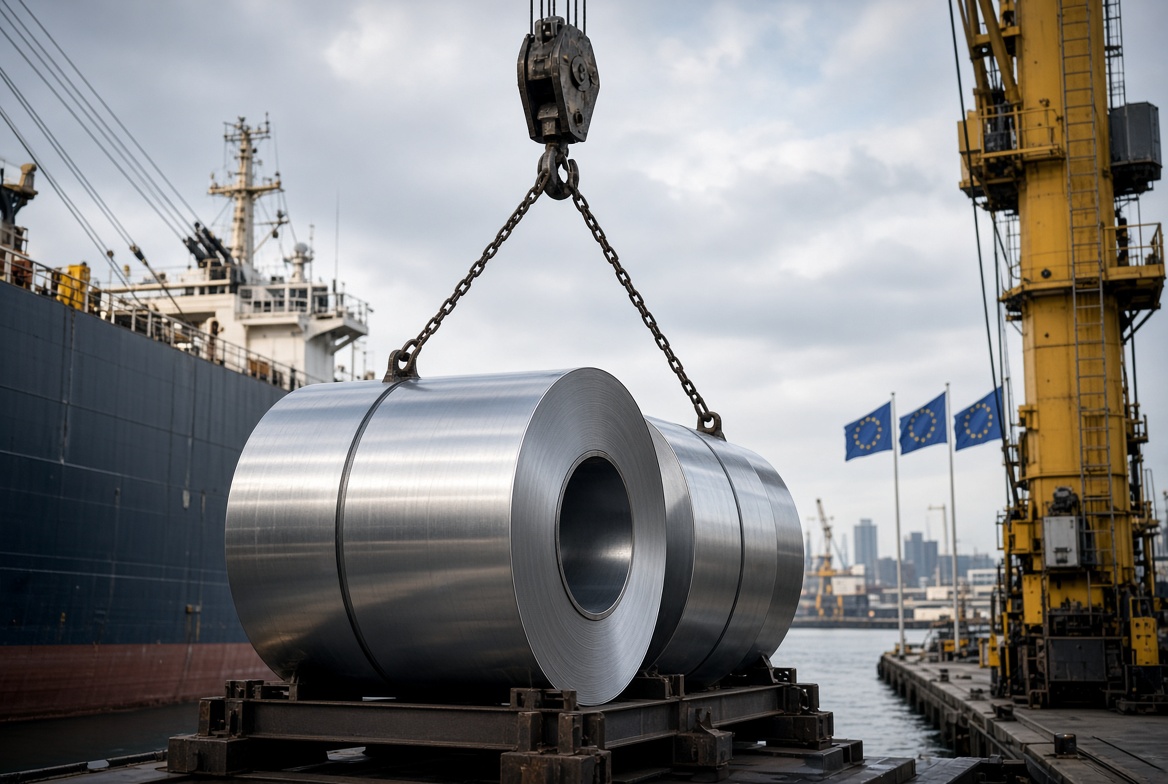
An industrial manufacturer exporting steel to the EU had to comply with the CBAM, the new mechanism that applies a carbon emission charge to certain imported products. Our legal report clarified which climate-related data had to be reported, which documentary evidence was required, and how to collaborate with suppliers in third countries. Thanks to our guidance, the company adapted its supply chain and indirect emissions reporting, allowing it to continue exporting without interruptions and offering a decarbonization narrative to its European clients. Since this was a typical international law scenario, we also issued a legal report in International Law.
Food company and safety and consumer information requirements
A food distributor received warnings from European clients regarding product labeling. The legal report analyzed compliance with the INCO Regulation (food information), the Regulation on contaminants in food, and the framework on food-contact materials. Following our recommendations, the company adjusted its labeling, reviewed suppliers, implemented an updated system, and obtained new certifications, which strengthened its position with major supermarket chains.
Fashion chain and chemical restrictions in textile products (REACH)
A textile brand with production in Asia wanted to sell in Europe and needed to determine how the REACH Regulation and other rules restricted the use of chemical substances in textile dyes. The legal report identified banned substances, quantity limits, and labeling obligations. After reducing the use of hazardous substances and obtaining certain certifications, the brand succeeded in accessing the European market without further issues.
Logistics operator and transport regulations
An international transport company had to comply with the Mobility Package (rest periods, cabotage, worker posting) and the Union Customs Code for non-EU goods. The report identified labor, wage, and customs risks. After applying the recommendations, displaced drivers were regularized and authorizations were obtained from Customs. This allowed the company to secure contracts with manufacturers and avoid border blockages.
Sectors in European Regulatory Compliance
When discussing European regulatory compliance, not all industries or activities are affected in the same way. Certain sectors face much stricter requirements due to their impact on public health, markets, transparency, or security. To begin with, the financial sector is among the most heavily regulated in the European Union. Banks, insurance companies, and investment firms must comply with a wide range of regulations, from anti-money laundering rules and payment system security to requirements introduced by the Digital Operational Resilience Act (DORA).
Telecommunications are also subject to intensive regulation, especially regarding user protection and service interoperability, as set out in the European Electronic Communications Code and other sector-specific rules that harmonize conditions across EU Member States. The energy sector likewise includes obligations on energy efficiency and the transition towards renewable sources. For example, regulatory packages such as the REPowerEU plan and energy efficiency directives aim to ensure that energy markets are sustainable, diversified, and resilient. Similarly, the healthcare and pharmaceutical sectors are characterized by high regulatory standards covering the safety of medical devices and medicines.
Finally, the transport sector is subject to multiple rules designed to ensure the safety of people and goods, facilitate cross-border mobility, and optimize infrastructure such as the Trans-European Transport Networks (TEN-T). These networks operate under a common EU regulatory framework for roads, railways, ports, and airports.
Do you need help with a compliance report?
European regulatory compliance is much more present in our daily lives than it may seem. Every time we accept a privacy policy, use an app that protects our data, rely on the safety of a medicine, pay by card in another country, or travel within the EU, there is always a European rule regulating how that activity or service must function. All of this has a direct impact on trust, economic competition, and the quality of the services we use. This is why, when we talk about legal reports or compliance in companies, we are also talking about potential risks, sanctions, or operational blockages.
If your organization needs legal reports, risk analyses, compliance plans, or specialized advice on European regulations, Arthur & Marin can assist you.
Contact us for an initial assessment at info@arthurmarin.com or by phone at +34 696 152 651.