If you need to complete procedures at the Spanish Consulate in Brussels and do not know where to start, or if you have already tried and the process has become complicated, we can help. Many procedures are delayed due to details that may seem minor but are not. Incorrect data, incomplete documentation, requests for corrections, expired certificates, or uncertainty about the correct procedure. For this reason, having professional support from the outset significantly increases your chances of success. We analyse your case in detail, review the documentation, and handle your file from start to finish.
Below, as lawyers specialising in International Law, legal procedures in Belgium, we outline some of the consular services in which we specialise, provide practical advice for preparing a strong application, and share successful case examples.
Specialists in consular services and procedures in Belgium
Below we set out some of the most relevant consular procedures that we regularly handle before the Spanish Consulate in Belgium as part of our daily practice. Among others, we assist with:
Consular Civil Registry and Spanish certificates
With regard to the Civil Registry, details are crucial, as any inconsistency may lead to refusals. We can assist you with:
- Birth, marriage, and death certificates (applications, requirements, and follow-up).
- Registrations and annotations (depending on the case: marriages, births, etc.).
- Preparation of complete and valid documentation for processing (including, where applicable, translations or apostilles).
Spanish nationality and related procedures
Nationality matters usually involve a combination of requirements, deadlines, and regulated documentation. In this area, we advise and assist with:
- Spanish nationality (by residence, option, recovery, or other applicable grounds).
- Documentary review to reduce the risk of requests for corrections and refusals.
- Preparation of the file and practical criteria to avoid common mistakes.
Consular notary services, powers of attorney, and declarations
When you need to grant a power of attorney or formalise a declaration, it is essential to prepare the wording, documentation, and requirements in advance. Therefore, we provide support with:
- Notarial powers of attorney (drafting and preparation of the required documentation).
- Proof of life certificates and other common consular declarations or attestations.
- Coordination of documentation to ensure its validity in Spain (banks, inheritances, administrative matters, etc.).
Requests, corrections, and appeals
In these cases, we assist you with:
- Reviewing the status of the file and identifying where the process is blocked.
- Preparing corrections (rectifying errors, submitting documents, reorganising the file).
- Documentary strategy to minimise further issues.
Personal documentation and other procedures
In many cases, the first step is simply gathering and submitting the correct documentation. For this reason, we help with procedures such as:
- Spanish passport (first issuance or renewal, documentation, issues, and file preparation).
- Consular registration (initial registration, change of address, data updates, and common error situations).
- Consular certificates and standard attestations, depending on the case.
How can we help you as advisors specialised in consular procedures?
We handle cases with method, experience, and sound judgment. Our goal is to prepare the procedure correctly from the beginning, minimise issues, support you throughout, and maximise the chances of success.
Preliminary review of documentation
First, we review all documentation before starting any procedure. This allows us to detect expired certificates, unnecessary documents, inconsistencies in personal data, or requirements that do not apply to the specific case. In this way, we avoid later requests for corrections, which are in practice the main cause of delays.
💡 Tip: knowing exactly which documents are essential and which are not prevents you from submitting incorrect or incomplete paperwork.
Complete preparation of the file
In addition to reviewing documents, a specialised advisor organises and structures the file according to the procedure and the usual criteria of the Spanish Consulate in Brussels. It is not just about gathering papers, but presenting them clearly, coherently, and logically to facilitate administrative review.
💡 Tip: a well-prepared file reduces the likelihood of formal errors and speeds up processing within normal timeframes.
Follow-up and handling of issues
If the consulate requests a correction or an issue arises, the advisor analyses the request and prepares a response that fits exactly what is being asked. This avoids improvised or excessive responses that often create new problems.
💡 Tip: responding correctly to the first correction increases the chances of unblocking the file without prolonging the process.
Questions and assistance throughout the entire procedure
In many cases, the greatest difficulty is the lack of a global view of the procedure. That is why continuous support allows you to know at all times what to do, what to expect, and when to act. From the beginning until the procedure is completed.
When is it advisable to seek professional support?
Administrative procedures before the Spanish Consulate in Brussels or the Embassy are processes where a small mistake can lead to major delays, partial refusals (with the possibility of correction), or even definitive refusals (where the issue cannot be fixed). These are the situations in which professional support is usually most advisable.
When a mistake can have legal or administrative consequences
First, it is advisable to seek support when the procedure affects your civil status, identity, rights, or registry situation. In these cases, even a small discrepancy (forexample, in surnames, dates, places, or documents) can trigger requests for corrections, delays, or closure of the file, requiring you to start over. Common examples include:
- Civil Registry procedures (registrations, certificates, annotations).
- Procedures linked to Spanish nationality.
- Documentation intended for procedures in Spain (notary, banks, inheritances, or public authorities).
💡 Practical tip: always check the “triple match”: full name, date of birth, and place of birth across all your documents. We can review your file and detect inconsistencies.
When the procedure is urgent or subject to a specific deadline
In addition, if your situation is urgent, the margin for error is very small. In these cases, we recommend contacting us as soon as possible and preparing documentation in advance. Typical urgent situations include:
- Imminent travel with expired or soon-to-expire documentation.
- Procedures with strict deadlines (administrative, judicial, or notarial).
- Immediate need for official documents required by third parties (employers, banks, universities, etc.).
💡Practical tip: if the procedure depends on securing an appointment, the objective is to have the file ready as soon as possible to take advantage of any available slot.
When the file has been rejected but can be corrected
If you have already tried to complete the procedure on your own and something went wrong, it is advisable to contact us so we can analyse the file in detail and identify the errors. We also assess possible solutions, appeal options, deadlines, which documents should be submitted, and any other elements needed to correct the result in time and in the proper form.
💡 Practical tip: if your file has been rejected, gather all current documents, the rejection letter, and the reasons provided, and contact us as soon as possible because these cases often involve strict and final deadlines. We will help you prepare a well-reasoned response to correct the outcome.
If you have no experience with administrative procedures and want peace of mind
Finally, if it is your first time dealing with consular procedures, it is normal to feel lost. Administrative processes often involve formal requirements and specific terminology that must be respected. Professional support reduces errors from the start and significantly increases the chances of success. Contact us if you have questions about:
- Which documents are essential and must be submitted.
- Validity periods of certificates, which vary depending on the procedure.
- Whether sworn translation or apostille is required for documents issued in different countries.
- Correct organisation and presentation of the file.
- Deadlines for submitting documents, correcting errors, or appealing, many of which are strict and non-extendable.
- Which path is best: correcting the file, resubmitting, or considering an appeal.
💡 Practical tip: prepare a folder with original documents, copies, translations, supporting evidence, and submission receipts. Also keep a checklist of what you have completed. This simple organisation greatly helps with review and analysis.
What sets our specialisation apart?
To manage a consular procedure correctly, it is essential to understand how a Consulate General operates. For that reason, our experience in Public Law before official institutions allows us to anticipate issues and prepare files efficiently.
Direct experience with official bodies and institutions
Over time, we have worked with files processed specifically before the Spanish Consulate in Brussels, which enables us to understand common procedures and the most frequent formal errors. This experience allows for more tailored preparation, awareness of which documents are usually reviewed in greater detail, and which aspects should be reinforced from the outset.
Professional background and administrative expertise
Our approach is professional, technical, and focused. We have a specialised background in administrative law and consular procedures, which enables us to guide users effectively. This knowledge is based not only on legal regulations but also on accumulated experience in preparing, reviewing, and monitoring procedures before the Spanish Consulate in Brussels.
Types of clients we assist
We work with a diverse range of clients, which has allowed us to gain a broad understanding of the different situations and procedures that may arise before the Spanish Consulate in Brussels. Among others, we assist:
- Spanish nationals residing in Brussels and other parts of Belgium.
- Individuals who need to complete Civil Registry, passport, or consular registration procedures.
- Families, minors, and individuals dealing with procedures that have financial or legal consequences in Spain.
This diversity strengthens our ability to adapt our approach to each specific case.
Professional working methodology
Our methodology is built on four pillars: analysis, preparation, follow-up, and clarity. First, we analyse the case and the exact procedure. Next, we review and prepare the necessary documentation. Finally, we maintain clear communication so that the client knows at all times the status of their procedure.
Commitment to transparency and trust
We work with transparency. We do not promise timelines or outcomes that do not depend on us. Our commitment is to do well what is within our control: prepare solid files, minimise errors, and provide honest and professional guidance. Ultimately, the combination of experience, administrative specialisation, and a professional methodology allows us to offer a reliable service.
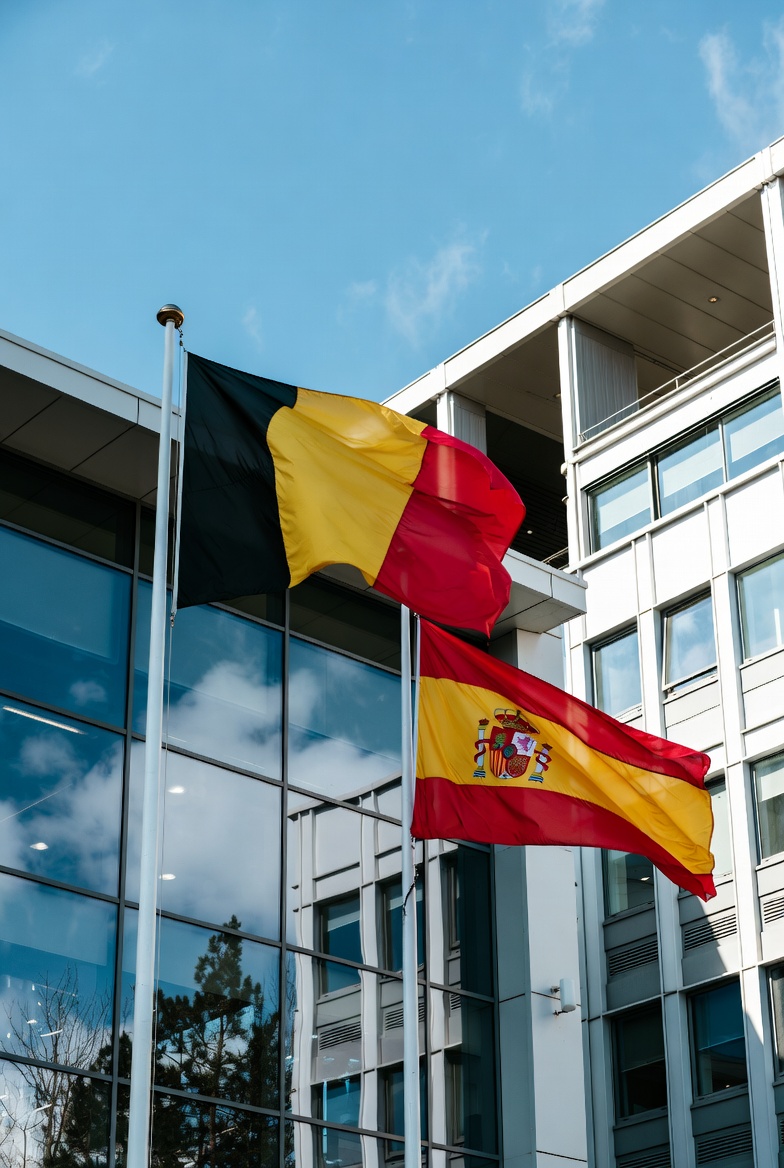
Successful cases handled before the Spanish Consulate in Brussels
Below are examples that illustrate common situations and how proper preparation and guidance made it possible to resolve them successfully. These examples are representative of frequent issues.
Consular registration with incomplete data
Situation: Spanish citizen residing in Belgium who needed to regularise her consular registration in order to complete additional procedures. There were discrepancies in surnames and data between Spanish and Belgian documents.
Intervention: Review of documentation, detection of inconsistencies, correction, and preparation of the appropriate documents to justify the variations.
Result: Consular registration accepted without additional requests, allowing the client to continue the remaining procedures without obstacles.
Correction after refusal in a Civil Registry procedure
Situation: Application for a Civil Registry certificate refused due to formal errors and invalid documentation. The applicant did not know how to respond to the request for correction.
Intervention: Detailed review of the rejection notice, assessment of the file, and preparation of a response within the established deadline.
Result: Correction accepted and certificate issued.
Consular power of attorney intended to take effect in Spain
Situation: Client needed to grant a power of attorney at the consulate for a banking procedure in Spain. There was a risk that the document would not be accepted by the receiving institution.
Intervention: Prior review of the content of the power of attorney and adaptation of the text and documentation to ensure validity for its intended use in Spain.
Result: Power of attorney granted and accepted by the bank without issues.
Appeal against a refusal of matrimonial capacity by the Civil Registry
Situation: Couple residing in Brussels requested a matrimonial capacity file before the consular Civil Registry. The Civil Registry Officer issued a refusal, considering that certain required elements had not been sufficiently proven to authorise the marriage.
Intervention: Review of the refusal resolution and the file. Analysis of the legal grounds used by the Civil Registry Officer and assessment of the feasibility of an appeal according to Civil Registry regulations and the applicable procedure. We prepared a well-founded written appeal, providing relevant additional documentation and clearly explaining the elements to be taken into account.
Result: The appeal was admitted and upheld, and the initial refusal was overturned.
‼️ Important: Each case depends on specific circumstances and must be assessed individually.
Personalised support for your consular procedures in Belgium
If your procedure before the Spanish Consulate in Brussels is becoming difficult or you simply want to ensure it is done correctly from the start, at Arthur & Marin we offer clear, professional, and solution-oriented guidance.
We analyse your case and the documentation you have, and we explain honestly what options exist and how to move forward, without unrealistic promises or unnecessary services. Our commitment is transparency, legal-administrative rigor, and support tailored to your specific situation.
Contact us by email at info@arthurmarin.com or by phone at +32 465 345 345.
💡 Tip: Contact Arthur & Marin for an initial assessment of your consular procedure and receive professional guidance tailored to your case.
FAQ | Frequently Asked Questions
Can I submit copies or do they need to be originals?
It depends on the procedure. Some processes require originals, while others accept simple copies or certified copies. Submitting copies when originals are required can block the procedure, so it is important to confirm this before going to the consulate.
What should I do if my personal data do not match across documents?
Differences in names, surnames, dates, or places of birth can cause issues. In these cases, it is advisable to detect discrepancies before submitting the file and properly justify the variations, rather than waiting for the consulate to point them out.
What is a correction request (subsanación) and how much time do I have to respond?
A correction request (subsanación) is when the consulate asks you to fix or complete a file. Usually a specific and non-extendable deadline is given. An incomplete or late response may close the procedure.
Can I appeal a negative Civil Registry decision?
In certain cases, it is possible to appeal Civil Registry decisions, provided it is done within the deadline and with proper justification. Not all decisions can be appealed in the same way, so it is important to analyse the specific case.
What is the advantage of preparing the procedure with professional help?
The main advantage is reducing errors and delays. A professional can review the documentation, prepare the file correctly, and guide you through the appropriate procedure, which increases the chances that the process moves forward without avoidable issues.
How do I know which procedure I should select?
You must select the procedure that exactly matches your objective (for example, passport, consular registration, Civil Registry, nationality, power of attorney). Therefore, before booking an appointment, confirm the correct procedure and the required documentation.
When is a sworn translation required?
A sworn translation is required when you submit documents issued in a language other than Spanish and the procedure requires them to be valid before the Spanish Administration. In practice, it is often necessary for certificates and official foreign documents.
When is an apostille or legalisation required?
An apostille or legalisation is required when a document issued abroad needs to have official validity before Spanish authorities. As a general rule, many foreign documents require an apostille (or legalisation, depending on the issuing country and applicable treaties). Since it depends on the country and the type of document, it is best to confirm this before submitting.
What happens if a certificate is expired?
If the certificate is expired, it is usually not accepted and you will be asked to correct the file by submitting an updated one. Therefore, it is advisable to check validity periods before submitting documents and, if in doubt, obtain a recent certificate.
When is it advisable to file an appeal?
It is worth considering an appeal when there is a negative decision that prevents you from continuing (for example, a refusal) and there are grounds to argue that the decision is incorrect or that facts or documents were not properly assessed. Acting quickly is essential, as appeals typically have strict deadlines. Before appealing, the advisable approach is to analyse the decision and the appropriate appeal route.
Which documents should I keep?
You should keep submission receipts, emails or communications with the consulate, correction notices or decisions, copies of submitted documentation (including translations and apostilles), and any proof related to the procedure. Keeping this record makes it easier to respond to corrections and prepare appeals.