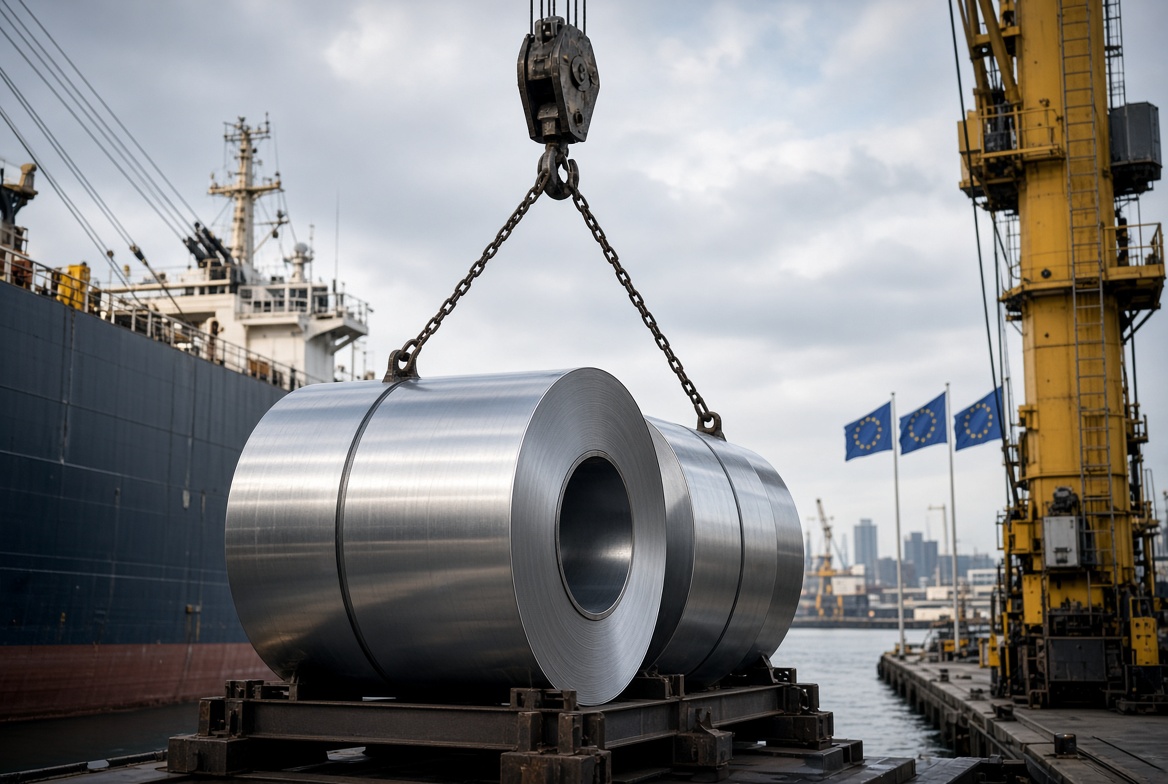
Proving preferential origin allows your company to access tariff reductions and avoid extra costs. If you export or import outside the EU, understanding how to certify preferential origin helps you make the most of the European Union’s trade agreements with third countries such as Canada (CETA), Japan, Asia, South Korea or Latin America.
This guide explains step by step, with clear examples, what documents you need, how to apply the rules of origin, and how to avoid mistakes that can lead to customs penalties. Everything is designed to help you trade safely and without risks. If your company wants to optimise costs, improve international competitiveness and comply with EU and international regulations, we can assist you. Ready to prove preferential origin and gain an advantage in your operations?
What is preferential origin?
Preferential origin allows a product to benefit from reduced or even zero customs duties when traded between the European Union and a country with which a preferential trade agreement exists. In other words, if a company can prove the preferential origin of a product, its goods may enter the destination country paying lower tariffs (or none at all) than those applied under the general regime.
The aim of this system is to encourage bilateral trade by rewarding products that were genuinely manufactured or sufficiently processed within the EU. This is a major advantage in sectors where customs duties have a significant impact on the final price of a product.
Difference between preferential and non-preferential origin
Non-preferential origin simply indicates the country from which a product comes. It is used for administrative purposes, such as labelling or applying trade measures (for example, anti-dumping duties). In this case, only the country of origin is identified, and no tariff benefits are granted.
Preferential origin, however, can reduce or eliminate customs duties. It applies when there is a trade agreement between the European Union and another country (such as Canada, Japan, Asian countries, the Middle East, South Korea or South American countries, among others). In addition to proving origin, the product must meet the specific requirements set out in the agreement between both parties in order to receive preferential tariff treatment.
💡 For example: a product may be considered originating in Argentina (a country with a preferential agreement with the EU), but still fail to meet the specific conditions required to obtain preferential tariff treatment.
In short non-preferential origin indicates the country of origin for administrative reasons, whereas preferential origin grants economic advantages—provided the conditions of the trade agreements are met.
Comparative table | Preferential vs. non-preferential origin
| Non-preferential origin | Preferential origin |
|---|---|
| Purpose | Identify the country of origin of the product for general trade purposes. |
| Customs Benefits | Does not grant any customs advantages. |
| Scope of Application | Statistics, labelling, anti-dumping measures, trade restrictions. |
| Applicable Rules | General rules under the Union Customs Code (UCC). |
| Illustrative Example | A product manufactured in Spain has Spanish origin for general purposes. |
| Economic Impact | Does not affect customs clearance costs. |
Regulatory framework for preferential origin in the European Union
Preferential origin in the European Union is based on a set of rules and international agreements that determine when goods may benefit from reduced or zero customs duties, as explained below.
Union customs code (UCC)
The Union Customs Code (Regulation (EU) No 952/2013) sets out the principles applicable to all customs operations in the EU, including those relating to the origin of goods. With regard to preferential origin, the UCC defines general concepts, identifies who may request preferential treatment, establishes how origin must be proven, and outlines how authorities act during controls. In practice, the UCC determines how trade agreements must be applied and interpreted by Member States, ensuring that the same goods receive identical preferential treatment regardless of the EU port or customs office of entry.
EU bilateral and regional trade agreements
The European Union has signed numerous free trade agreements with individual countries (such as Canada, Japan, South Korea, Chile, Mexico, Singapore, Vietnam, New Zealand) and with regional blocs (such as Mercosur or Central America). Each agreement includes its own Protocol on Origin, which sets out the rules determining when a product is considered originating and may benefit from tariff preferences. These protocols detail elements such as product-specific rules and the requirements for proof of origin (invoice declarations, EUR.1 certificates, self-certification systems, etc.).
Pan-euro-mediterranean (PEM) convention
The Pan-Euro-Mediterranean Convention harmonises the rules of origin between the EU and a wide group of European, Mediterranean and EFTA countries, such as Türkiye, Switzerland, Norway, Morocco, Tunisia, Egypt, Israel and Jordan. Its importance lies in allowing companies to use originating materials from several PEM countries while still maintaining preferential origin for the final product. This convention is particularly useful for industrial and agri-food sectors, as it enables different stages of production to be carried out in multiple countries.
Generalised system of preferences (GSP and GSP+)
The Generalised System of Preferences is an EU regime granting tariff advantages to developing countries depending on their economic situation. Several schemes exist, including the standard GSP and GSP+ (which rewards compliance with human rights, labour and environmental conventions). For EU importers, the GSP helps reduce entry costs for products from beneficiary countries, provided that origin is correctly proven and the required processing conditions are met.
REX system (registered exporter system)
The REX system is the self-certification platform used under the GSP and incorporated into several EU agreements. Instead of relying on certificates issued by authorities, exporters themselves issue origin statements on invoices, provided they are registered. For EU importers, it is essential to verify that the REX number is correctly indicated and that the origin statement meets the requirements of the relevant agreement.
Implementing regulations and administrative cooperation
Implementing regulations develop the UCC and trade agreements, regulating administrative cooperation between EU customs authorities and third countries. Errors in origin may lead to retroactive payment of duties, interest and even penalties. Therefore, managing origin should be treated as a core part of customs compliance, not merely an administrative formality.
Other types of EU agreements with third countries
Beyond free trade agreements, the EU also maintains:
- Association and neighbourhood agreements (e.g., with Mediterranean and Eastern European countries), which often include trade chapters and preferential origin rules.
- Economic partnership agreements with regions such as Africa, the Caribbean and the Pacific (ACP), which also include accumulation systems and specific rules of origin.
- Customs union agreements, such as the one with Türkiye, which apply specific origin rules and documentation depending on the type of goods and the regime concerned.
In practice, almost any EU agreement that reduces or eliminates tariffs with a third country or regional bloc includes its own set of preferential origin rules.
When is it necessary to prove preferential origin?
It is necessary to prove preferential origin whenever a company wants to benefit from the tariff treatment provided in a trade agreement between the EU and a third country. If no proof of preferential origin is submitted, customs authorities will apply the standard tariff rate, even if an agreement is in force.
Exports to countries with a trade agreement
When an EU company exports goods to a country with which the EU has a trade agreement, the importing company must prove the preferential origin in order to obtain reduced or zero import duties. In these cases, the exporter usually issues a proof of origin (for example, an EUR.1 certificate, EUR-MED certificate, or an invoice declaration under the REX system), which the customs authority of the destination country will use to apply preferential treatment.
💡 Important: If the exporter can prove preferential origin, the product will enter the country with lower customs costs than competitors from countries without an agreement.
Imports into the European Union
For imports into the EU, it is the EU importer who requests preferential tariff treatment based on the origin of the goods. To do so, the importer must present proof of origin issued by the exporter in the third country. If preferential origin is not proven, customs will apply the general tariff rate, increasing the overall cost of the transaction. In addition, if a later customs audit concludes that preferential origin was not justified, the importer must pay the difference, plus interest and potentially administrative penalties.
Accumulation rules (diagonal, bilateral, full)
Accumulation rules allow companies to combine the origin of goods from several countries that participate in the same agreement or network of agreements, so that the final product can still be considered originating and benefit from tariff preferences. It may be bilateral between the EU and a single partner, diagonal among several countries linked by compatible agreements (as in the Pan-Euro-Mediterranean Convention), and full accumulation in certain regimes, allowing processing carried out in different participating countries to be fully combined.
In these cases, proving preferential origin becomes even more important, because the company must justify not only the origin of its own processing but also that of materials or components from other countries in the accumulation network. This requires collecting intermediate proofs of origin, managing supplier documentation and maintaining traceability to show compliance with the accumulation rules.
Highly processed products
For highly processed products—such as industrial machinery, electronic components, vehicles, textiles or chemical products—origin traceability is more complex. Their production typically involves multiple manufacturing stages, different countries and extensive supplier networks. Therefore, proving preferential origin for such goods requires more than identifying where the final product was assembled. It involves reviewing the bill of materials, determining which components are originating, and checking whether the processing carried out meets the rules of origin set out in the relevant agreement.
💡 Tip: For complex products, it is advisable to request supplier origin declarations, verify that they meet the requirements of the agreement and keep all supporting documentation.
The more sophisticated a product is, the greater the need for technical documentation, traceability and control of the production process to successfully prove preferential origin before customs authorities.
Documents used as proof of preferential origin
The rules of origin in each trade agreement specify which documents are accepted as proof. Below are the main types of preferential origin documents used in trade with the European Union.
EUR.1 certificate
The EUR.1 certificate is one of the most common documents used to prove preferential origin under the EU’s traditional trade agreements. It is issued by customs authorities so that the importer can request preferential tariff treatment in the country of destination. To obtain an EUR.1, the exporter must be able to prove that the product meets the origin rules of the relevant agreement and must keep all necessary documentation (supplier invoices, bills of materials, manufacturing processes, etc.). This certificate is mainly used when the exporter does not yet have the authorisation to self-certify origin.
EUR-MED certificate
The EUR-MED certificate is used within the Pan-Euro-Mediterranean (PEM) Convention and in trade agreements that apply its origin rules. It is used not only to prove the preferential origin of goods but also to indicate whether diagonal accumulation has been applied with other countries in the Pan-Euro-Med network. This is particularly useful when products include materials sourced from several countries. In practice, the EUR-MED is very similar to the EUR.1 certificate but includes specific boxes to indicate the type of accumulation used and the applicable PEM rules.
Invoice declaration and origin declaration
An invoice declaration is a statement that the exporter includes directly on the invoice to confirm that the products have preferential origin under the relevant trade agreement. This eliminates the need for a separate certificate of origin, making the process more practical. It is typically used when the exporter holds the status of authorised exporter, although the exact conditions depend on each agreement.
💡 In all cases, the exporter must keep all documents that prove the origin of the goods, as customs authorities may carry out post-clearance verifications.
REX system and registered exporter’s declaration
In regimes that use the REX system, such as the Generalised System of Preferences (GSP), proof of preferential origin is managed through an official database. Instead of certificates issued by the authorities, the exporter only needs to include their REX number in the origin declaration. With that number, the importer can request preferential tariff treatment. Even so, the exporter must ensure that their products genuinely comply with the rules of origin and must keep complete internal records. For their part, the importer must verify that the declaration is properly drafted and that the REX number is valid and genuinely corresponds to the exporter.
Authorised exporter
Under many trade agreements, the EU allows companies to obtain the status of authorised exporter. With this authorisation, the company can self-certify the preferential origin of its products directly on the invoice or other commercial documents, without needing to request an EUR.1 certificate for every shipment. To obtain this status, the company must demonstrate a solid compliance record, maintain effective internal controls and be able to justify the origin of its products at any time. In return, it gains efficiency in its export operations, avoiding the administrative steps required for exporters without authorisation.
Supporting evidence
To prove preferential origin, companies must keep documents such as raw material purchase invoices, bills of materials, technical data sheets, manufacturing processes, supply contracts or inventory records.
Maintaining proper traceability is essential for passing post-clearance audits without issues and avoiding the withdrawal of previously granted preferential tariff treatment.
For this reason, many companies integrate the management of preferential origin into their compliance systems, enabling them to quickly provide documentation when requested by customs authorities in either the exporting or importing country.
Comparative table of preferential origin documents
| Document | Main Use | Who Issues It | Typical Context |
|---|---|---|---|
| EUR.1 Certificate | To prove preferential origin under bilateral/regional agreements | Customs authority or authorised body | One-off exports from or to the EU under traditional agreements |
| EUR-MED Certificate | To prove origin and accumulation within the PEM zone | Customs authority or authorised body | Operations involving diagonal accumulation |
| Invoice Declaration / Origin Declaration | Self-certification on a commercial document | Exporter (sometimes only an authorised exporter) | When permitted under the relevant agreement |
| REX Declaration by Registered Exporter | Self-certification under the GSP and agreements using the REX system | Exporter registered in the REX system | Exports from GSP countries or under modern EU–third country agreements |
| Authorised Exporter Self-Certification | Invoice declaration without requiring an EUR.1 | Exporter with customs authorisation | Established companies with high export volumes |
| Supporting Evidence | To verify the accuracy of the declared origin | Company (internal documentation) | Post-clearance checks and origin audits |
Methods for proving preferential origin depending on the applicable agreement
To decide whether a product qualifies as “originating” and can benefit from reduced or zero customs duties, trade agreements use different technical rules. In simple terms, all these rules are based on two ideas. A product can be considered originating either because it has been entirely produced in one country, or because it has been sufficiently transformed there even if some materials came from other countries.
Wholly obtained products
A product is “wholly obtained” when everything about it comes from one country. This applies to things like crops grown in that country, minerals extracted from its land, fish caught by its vessels or animals born and raised there. This rule is used mainly for agricultural and basic raw materials, because most manufactured products include parts from different places.
Sufficiently processed products
When a product includes materials from other countries, customs authorities check whether the work done in the exporting country is important enough to count as “originating.” The agreement sets clear rules to decide this. For example, the product may need to change its customs classification after processing, stay below a certain percentage of non-originating materials, meet a minimum level of added value or undergo a specific manufacturing step. If the processing meets the required level, the product can be treated as originating.
Operations that are not enough
All trade agreements include a list of operations that are not enough to give a product originating status, even if they are carried out on non-originating materials. These are usually very simple tasks, such as packaging, washing, sorting, labelling, basic assembly or mixing processes that do not actually change the product. These operations are never sufficient to confer preferential origin.
Product-specific rules (PEM, CETA, Japan and others)
In addition to the general criteria, each trade agreement includes specific rules for each product, organised in what are known as “list rules.” These rules can vary significantly between different systems—such as the Pan-Euro-Mediterranean (PEM) Convention, CETA, the EU–Japan agreement or more modern treaties—even for the very same tariff code.
💡 For example, a textile product may require a certain level of manufacturing in the country of origin, while an electronic component may need to undergo a change in tariff heading.
Proof for non-originating materials
To prove preferential origin, a company must keep documents showing which materials were imported and what work was done in the exporting country. This may include purchase invoices, bills of materials, supplier declarations and process descriptions. These documents help show customs authorities where each part of the product comes from and how it was transformed. Keeping good records is essential for passing audits and defending the origin declared on customs documents.
Common mistakes when proving preferential origin
Incorrect tariff classification
One of the most common mistakes is classifying a product under the wrong tariff heading and therefore applying origin rules that do not actually apply. This can lead to using the wrong transformation criteria, incorrect limits on non-originating materials or minimal operations that do not match the product. As a result, the certificate or declaration may be rejected. To avoid this, it is important to double-check the classification using explanatory notes, binding tariff information or expert advice before analyzing the origin.
Incomplete declarations
Another frequent issue is issuing origin declarations with incorrect or incomplete information. Examples include referring to the wrong agreement, using a description that is too generic, inconsistencies in dates, missing signatures or an incorrect invoice number. Although some systems tolerate minor errors, an incomplete declaration may lead to denial of preferential treatment or delays due to requests for additional information. Using reviewed templates and internal checklists greatly reduces this risk.
Lack of supporting documentation
Proving preferential origin does not end when the certificate or declaration is issued. It is essential to keep the supporting documentation for several years. Many companies make the mistake of not properly archiving purchase invoices, bills of materials, process sheets, supplier declarations or added-value calculations, which makes any later verification more difficult. Without this documentation, customs authorities may withdraw the preferential treatment and demand duties, interest and even penalties.
Incorrect use of the REX system
In regimes based on the REX system, common mistakes include using an invalid REX number, declaring it before registration is confirmed, applying it to products that do not meet the rules of origin or failing to update the information when the company’s name or address changes. These mistakes can lead to rejected declarations, reputational damage or even the revocation of REX registration. Keeping information up to date and training staff is essential.
Incorrect application of accumulation
Bilateral and diagonal accumulation are very useful tools, but they also lead to mistakes if companies do not check whether all the countries involved belong to the same network of agreements. Another common error is treating materials as originating without a valid, up-to-date proof of origin. Correct application requires verifying the agreements, keeping intermediate proofs and documenting the calculations carefully.
Subcontracting outside authorised countries
Many companies outsource production stages to countries that are not covered by the applicable agreement. If any operation is carried out in a non-authorised country, the final product may lose its preferential origin, even if most of the processing takes place in the preferential territory. Before outsourcing, it is essential to check which countries are included in the agreement and analyse how subcontracting affects the origin rules.
Consequences of not being able to prove preferential origin
Properly proving preferential origin is essential to avoid additional costs and protect a company’s reputation. If a business cannot justify the preferential treatment applied to an import or export, customs authorities can take action immediately. Understanding these consequences—and anticipating them—is crucial for any international trader.
Recovery of retroactive customs duties
The most common consequence is that customs authorities demand payment of all duties that were not collected because preferential tariffs were applied. This can include standard customs duties, import VAT and late-payment interest calculated from the original customs clearance date. The financial impact can be very high, especially if the company applied preferential treatment repeatedly or without having the required supporting documentation.
Penalties during customs inspections or audits
In addition to paying duties retroactively, customs authorities may impose financial penalties for failing to comply with origin rules. These penalties typically result from issues such as failure to meet formal requirements under the agreement, insufficient documentation, incorrect tariff classification or inaccurate declarations.
Loss of authorised exporter status or REX number
If a company repeatedly makes mistakes or fails to keep proper records, the authorities may suspend or revoke its authorised exporter status or its REX number. Losing these authorisations means going back to relying on EUR.1 certificates and completing more customs procedures, increasing both costs and processing times. Regaining these authorisations usually requires additional audits and proof of strong internal control systems.
Liability for false declarations to customs authorities
If a company issues an incorrect or false origin declaration, it may face administrative—and in some countries even criminal—liability, depending on the seriousness of the case. Authorities may consider the declaration “inaccurate” when the error is unintentional, or “fraudulent” when there is intent to obtain a benefit.
Impact on business continuity and the supply chain
Beyond the financial consequences and penalties, failing to prove origin can lead to customs delays, blocked shipments, contract renegotiations and loss of competitiveness. In sectors sensitive to customs duties—such as automotive, textiles, chemicals, food or electronics—losing preferential treatment can directly affect final prices and market competitiveness.
Successful practical case studies
To better understand how proving preferential origin works in real situations, it is helpful to look at practical case studies. These examples show how to correctly apply the origin rules and which mistakes to avoid.
Case 1 | Textile company applying preferential origin under the EU–South Korea agreement
A textile company wanted to export garments to South Korea with reduced tariffs. Although the final manufacturing took place in France, some fabrics and accessories came from third countries. After reviewing the bill of materials and the sufficient processing rule under the EU–Korea agreement, we confirmed that the garment could still be considered originating. Once the supplier declarations were collected and the production processes verified, the company was able to prove preferential origin without any issues.
Case 2 | REX self-certification for exports to Canada (CETA)
A European SME started exporting light machinery to Canada under CETA. To avoid EUR.1 certificates and speed up shipments, it decided to register in the REX system. After completing the registration and adjusting its internal procedures, the company began self-certifying origin directly on the invoice. Because it kept all supporting documents properly archived, it passed a customs inspection without any problems, and the authorities confirmed the validity of its declarations.
Case 3 | Mistake in the sufficient processing criterion for metal products
A manufacturer of metal parts regularly exported to several countries under preferential treatment. During an inspection, customs authorities discovered that some parts did not meet the sufficient processing requirement because part of the production took place outside the authorised countries. As a result, the company had to pay retroactive customs duties. This case highlights the importance of analysing the entire production chain and ensuring that every stage complies with the origin rules, especially for products with complex manufacturing processes.
Secure preferential origin for your customs operations
Proving preferential origin correctly helps you reduce costs, avoid penalties and stay competitive in international markets. Once the right steps are in place, your company can benefit from reduced or zero customs duties with full peace of mind. And since customs authorities are carrying out more and more checks and audits, having proper guidance is more important than ever.
If your company exports, imports or works with international supply chains, now is the time to take action. We can help you review your procedures, check your documentation, prepare the necessary certifications and make sure all your operations comply with EU rules of origin. We are lawyers specializing in Customs Law and International Trade.
Contact us at info@arthurmarin.com or by phone at +32 465 345 345 and protect your business while making the most of the benefits of preferential origin.
Frequently Asked Questions (FAQ)
How can I prove preferential origin for exports?
To export with preferential tariff treatment, you must show that your product meets the origin rules of the relevant agreement and provide a valid self-certification (EUR.1, invoice declaration or REX, depending on the case). All documentation must be available for later checks, since applying the wrong rule can lead to retroactive duties.
What documents do I need to prove preferential origin?
It depends on the agreement, but common documents include the EUR.1 certificate, invoice declaration, REX number, bills of materials and evidence of the production process. It is essential to keep supplier documentation, especially for non-originating materials. Without supporting evidence, customs may deny preferential treatment.
What happens if customs rejects the EUR.1?
If the EUR.1 is rejected due to errors or inconsistencies, the shipment may lose tariff benefits. In some cases it can be corrected or reissued, as long as the product truly meets the origin rules. If not, additional duties may be charged and penalties may apply.
How can I know whether my product meets the sufficient processing requirement?
Sufficient processing is determined by the specific rule in the agreement—usually a change in tariff heading, a value-added requirement or a specific manufacturing process. Misinterpreting this rule can invalidate preferential origin.
How long must I keep proof of origin?
Generally, between 3 and 5 years depending on the trade agreement. This allows customs authorities to carry out post-clearance checks. If you do not keep the documents, they can claim duties retroactively and even withdraw your authorised exporter or REX status.
Can I correct an incorrect origin declaration?
Yes, as long as the product genuinely meets the origin rules. Corrections must be made through the official channels and may require additional documents. If preferential treatment was applied incorrectly, retroactive duties may be charged.
What happens if the destination country requests a post-clearance verification?
The company must provide all documents supporting the preferential origin: technical sheets, supplier declarations, production records, etc. If the origin cannot be proven, the importing country may claim retroactive duties. In serious cases, it may even block future preferential treatment.
Can I recover duties already paid if I later prove preferential origin?
In many agreements, it is possible to request remission or repayment of duties if you can later prove preferential origin. You must submit the valid document within the deadline. If the agreement does not allow repayment, the duties cannot be recovered.
How does subcontracting in third countries affect preferential origin?
If part of the production is carried out in a country that is not covered by the permitted accumulation rules, the product may lose its preferential origin. It is essential to check where processes are subcontracted and whether they create or undermine originating status. Poor supplier control is a common reason for preferential origin being rejected.