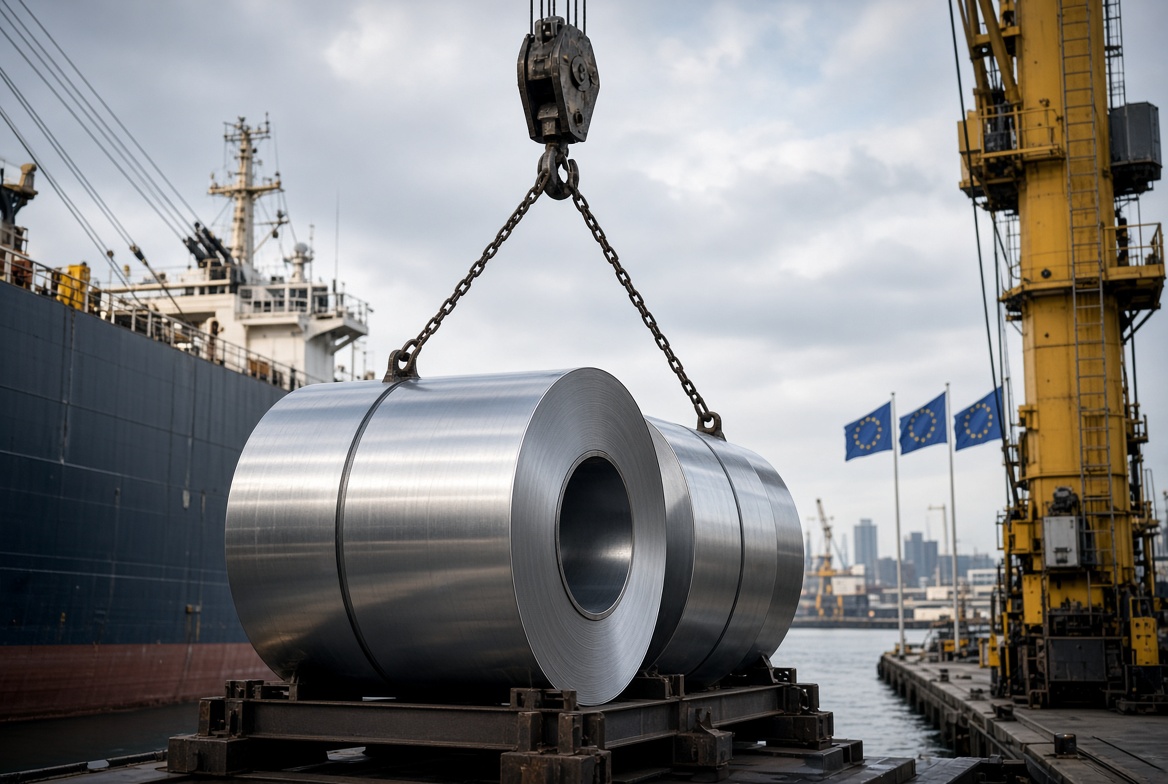
Importing from outside the EU to Belgium can offer significant business opportunities but also demands thorough knowledge of the applicable customs and tax requirements.
In this article, as lawyers specialized in customs and European Union law, we explain everything necessary to carry out import operations legally, avoid penalties, and optimize costs.
What does importing from outside the EU really mean?
When we talk about importing from outside the European Union, we mean introducing goods from a third country (for example, China, the United States, Switzerland, or Turkey) into the EU customs territory, specifically Belgium, as the point of entry.
This operation has direct implications on three fronts:
- Customs: import clearance, tariff classification, origin, inspections.
- Tax: payment of customs duties and VAT, EORI management, fiscal representation.
- Legal: regulatory compliance and importer responsibility.
EORI registration: essential for legal operation
Any company wishing to import from a non-EU country must have a valid EORI number (Economic Operator Registration and Identification) with Belgian customs.
💡Legal tip: If your company is established outside the EU, you will need to appoint a customs representative in Belgium.
At Arthur & Marin, we can act as your legal representative or assist you in establishing a company or branch in Belgium to facilitate your import operations.
Tariff classification: avoid errors and unnecessary costs
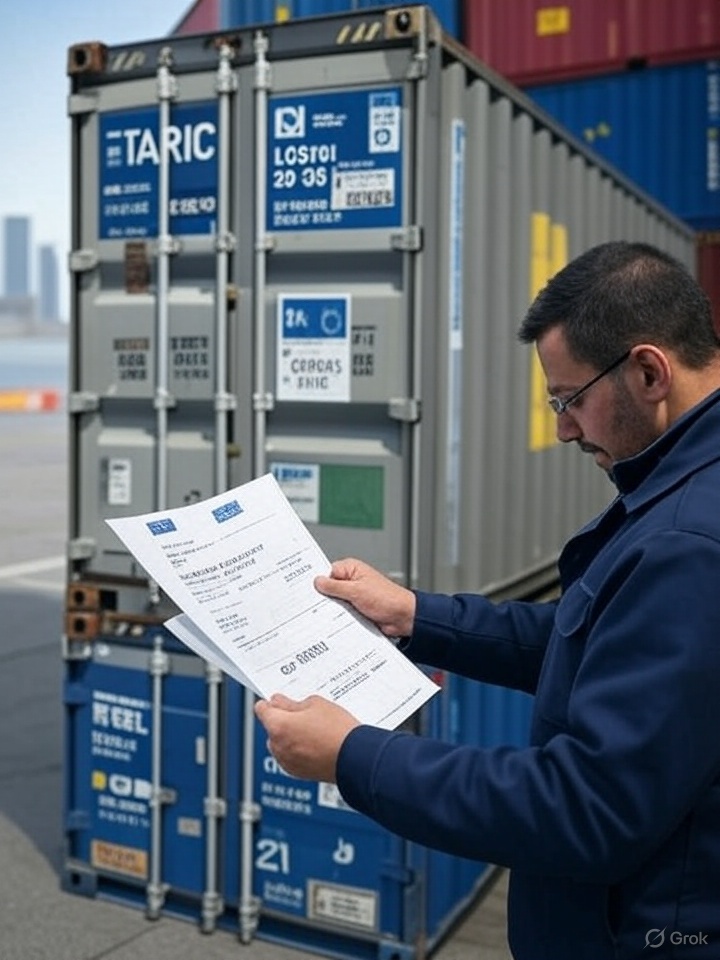
Every product to be imported must be accurately identified using a TARIC code (Integrated Tariff of the European Communities). This classification is important to calculate:
- Applicable tariffs
- Control measures or prohibitions
- Eligibility for preferential agreements
Incorrect tariff classification can have serious consequences:
- Paying higher duties than necessary
- Losing tariff advantages
- Penalties for non-compliance with sanitary, technical, or environmental requirements
We analyze the legal and technical nature of the product, justify the correct classification, and defend your position before customs authorities if disputes arise.
Preferential origin: importing with tariff advantages from outside the EU
One of the most decisive aspects when importing non-EU products is correctly identifying their customs origin, as this directly affects the application of fiscal and tariff benefits. The country of dispatch is often confused with the country of origin in legal terms, potentially causing unnecessary costs.
What advantages does a preferential origin offer?
When a product meets the preferential origin requirements under a trade agreement between the European Union and a third country, the importer can benefit from exemptions or reduced tariffs. Examples of such agreements include CETA (EU–Canada), the EU–South Korea Agreement, the EU–Japan FTA, among others.
To access these benefits, presenting valid proof of origin is essential, such as:
- The EUR.1 certificate issued by the customs authorities of the exporting country.
- Or a statement of origin included in the supplier’s invoice, according to the applicable agreement’s rules.
From our firm, we advise you on how to correctly certify the origin of your products, avoid mistakes, and keep the necessary documentation in case of subsequent inspections by Belgian or European customs.
Practical case: recovery of unduly paid tariffs
A Canadian company that imported industrial machinery into Belgium initially failed to apply the provisions of the EU–Canada agreement (CETA). After our legal analysis, we demonstrated that the goods met the preferential origin criteria.
Result: Over 25.000,00 EUR in import duties were recovered through a refund procedure before Belgian customs.
Importing regulated products from outside the EU: technical and sectoral requirements in Belgium
Before initiating an import from a non-EU country into Belgium, it is essential to identify whether the product is subject to specific technical regulations or sectoral rules. Many goods must comply with strict conditions imposed by European Union legislation, failure of which can result in serious legal and economic consequences: detention at customs, rejection of the goods, or administrative penalties.
Which product categories face the most regulatory control?
Certain sectors are especially monitored under EU and Belgian regulations. The most sensitive include:
- Food and beverages: must comply with Regulation (EC) No 178/2002 on food safety, meet labeling, traceability, and sanitary control standards, and, where applicable, obtain prior authorizations.
- Electrical and electronic equipment: require CE marking and conformity with directives such as RoHS (Restriction of Hazardous Substances) and WEEE (Waste Electrical and Electronic Equipment).
- Cosmetics and medical devices: are subject to Regulation (EC) No 1223/2009 and additional requirements for notification, technical documentation, and product safety evaluation.
Risks and importance of technical or documentary non-compliance
Belgian customs, as the frontline authority enforcing these rules, can detain, reject, or even destroy goods that do not meet legal requirements. Furthermore, the importer assumes direct legal responsibility for products placed on the EU market, including potential claims for damages, administrative sanctions, and reputational damage.
Effective legal strategy for importing into Belgium: planning and optimization
Importing from outside the EU to Belgium requires much more than operational knowledge of international logistics—it demands a preventive, specialized study from analysis to legal structuring.
Customs and tax planning before import
Every import operation should begin with a rigorous legal review to anticipate risks and optimize costs:
- Correct tariff classification (TARIC code) and precise customs valuation, essential for accurately calculating duties payable.
- Identification of possible tariff benefits under preferential agreements (such as CETA, EU–Mexico, EU–South Korea, EU–Singapore, etc.).
- Impact of import VAT and available mechanisms for deduction or recovery, especially if registered as a taxable operator in Belgium.
Supplier audit and verification of goods’ origin
The product’s origin determines eligibility for preferential tariff treatment. A prior supplier assessment allows you to:
- Verify that goods comply with preferential origin requirements under EU trade agreements.
- Prevent false origin declarations, which constitute customs offenses punishable administratively and criminally.
- Incorporate contractual clauses providing legal guarantees on origin, product quality, and regulatory compliance.
Strategic use of special customs procedures
EU customs law offers various legal tools to reduce or eliminate payment of import duties depending on the use or destination of goods. We evaluate and implement procedures such as:
- Customs warehousing or transit regimes, allowing storage or transfer of goods without immediate payment of tariffs.
- Processing under customs control, useful when products will undergo manufacturing before sale in the EU.
- Temporary importation or re-export, with rights to refund paid duties.
These mechanisms are especially relevant for industrial, logistics, or tech companies seeking fiscal efficiency without sacrificing legal security.
Establishing legal entities in Belgium
Additionally, if your company is outside the EU and plans to import regularly into Belgium, you will need to establish an appropriate legal presence. Depending on your activity and needs, we can assist you in choosing between:
- Branch: no separate legal personality, easier to establish but with direct liability for the parent company.
- Subsidiary: a Belgian company with legal autonomy, ideal for stable operations and local growth.
We manage company formation, fiscal and customs representation before Belgian authorities, and operational setup in compliance with the law.
Ongoing legal assistance: protection against inspections and litigation
Our legal team supports you continuously, offering:
- Immediate responses to customs authorities’ requests or notifications.
- Legal defense against inspections, retroactive adjustments, litigation, or sanction proceedings.
- Representation before national and European authorities, both administrative and judicial.
Having specialized legal advice from the start ensures safe imports compliant with the European legal framework
Real cases: common mistakes when importing from outside the EU to Belgium
Many companies that decide to import into Belgium from third countries do so without proper legal advice, resulting in unexpected costs, customs penalties, and shipment blockages. Below, we highlight some of the most frequent errors identified in legal practice:
- Incorrect declaration of customs value: one of the most common reasons for customs inspections. Incorrectly including elements in the declared value can lead to retroactive adjustments and substantial financial penalties.
- Improper application of free trade agreements: many companies erroneously claim tariff reductions without complying with the required preferential origin rules.
- Lack of mandatory technical certifications: certain products — such as electronics, medical devices, or cosmetics — require specific conformity assessments (CE marking, technical declarations, sanitary authorizations). Omitting these documents can cause border seizures or importer liability.
- Errors in VAT registration in Belgium: operating without proper identification as a taxable person or failing to comply with local invoicing requirements may prevent the deduction of input VAT, resulting in unnecessary fiscal costs.
- Incorrect knowledge of the correct tariff code (TARIC nomenclature): misclassification of goods can lead to higher tariffs, additional requirements, or loss of preferential treatment.
Having preventive legal advice allows you to avoid these critical errors and save thousands of euros in penalties, logistical delays, or fiscal corrections.
Summary of common errors
| Common error | Description | Consequences | How to avoid it |
|---|---|---|---|
| Incorrect declaration of customs value | Incorrect inclusion of elements in the declared customs value | Retroactive adjustments, significant penalties | Detailed review and advice on customs valuation |
| Improper use of free trade agreements | Incorrect use of tariff reductions without meeting origin rules | Rejection of benefits and potential sanctions | Confirm origin rules compliance with specialized advice |
| Lack of mandatory technical certifications | Absence of conformity assessments for electronics, medical, or cosmetic products | Border seizures, civil liability | Obtain and verify all required certifications |
| Errors in VAT registration in Belgium | Not properly registered or failing to meet local fiscal requirements | Inability to deduct VAT, fiscal overcosts | Proper registration and strict compliance with Belgian VAT regime |
| Misclassification of goods (TARIC) | Incorrect classification under TARIC nomenclature | Higher tariffs, extra requirements, or loss of preferences | Prior classification audit by legal experts |
Are you importing from China, the USA, the UK, or Turkey? Know the specific rules
Each country of origin has particular technical, fiscal, or customs requirements that must be precisely analyzed to avoid surprises. Here are some practical examples:
- China: Many Chinese-origin goods — such as toys, machinery, textiles, or electronics — are subject to enhanced controls on safety, public health, and CE labeling. Additionally, anti-dumping measures may apply to certain sectors.
- United States: There are regulatory differences with the EU, especially regarding medical products, cosmetics, and food. This requires thorough technical verification of labeling and compliance with European standards.
- United Kingdom: Post-Brexit, imports from the UK no longer benefit from the Single Market and are subject to customs procedures, rules of origin under the Trade Agreement, and specific VAT regulations.
- Turkey: Although there is a partial customs union with the EU, not all products are covered. For example, agricultural products and certain services remain subject to tariffs or import licenses. Certificates may also be required.
Import to Belgium with legal security and strategic planning
Importing from outside the EU to Belgium requires much more than simply completing basic procedures. Proper planning enables cost reduction, penalty avoidance, and full compliance with European and sector-specific regulations. We offer a comprehensive import strategy, tailored to your industry, country of origin, product type, and business structure.
Thanks to our expertise in customs law, international taxation, and EU technical regulations, we help you anticipate risks, maximize tariff benefits, and ensure full documentary and logistical compliance for your operations.
💡 Want to import with legal certainty, optimize your costs, and avoid penalties?
📞 Call us at +32 465 345 345 or email info@arthurmarin.com and start importing with confidence, efficiency, and legal support.