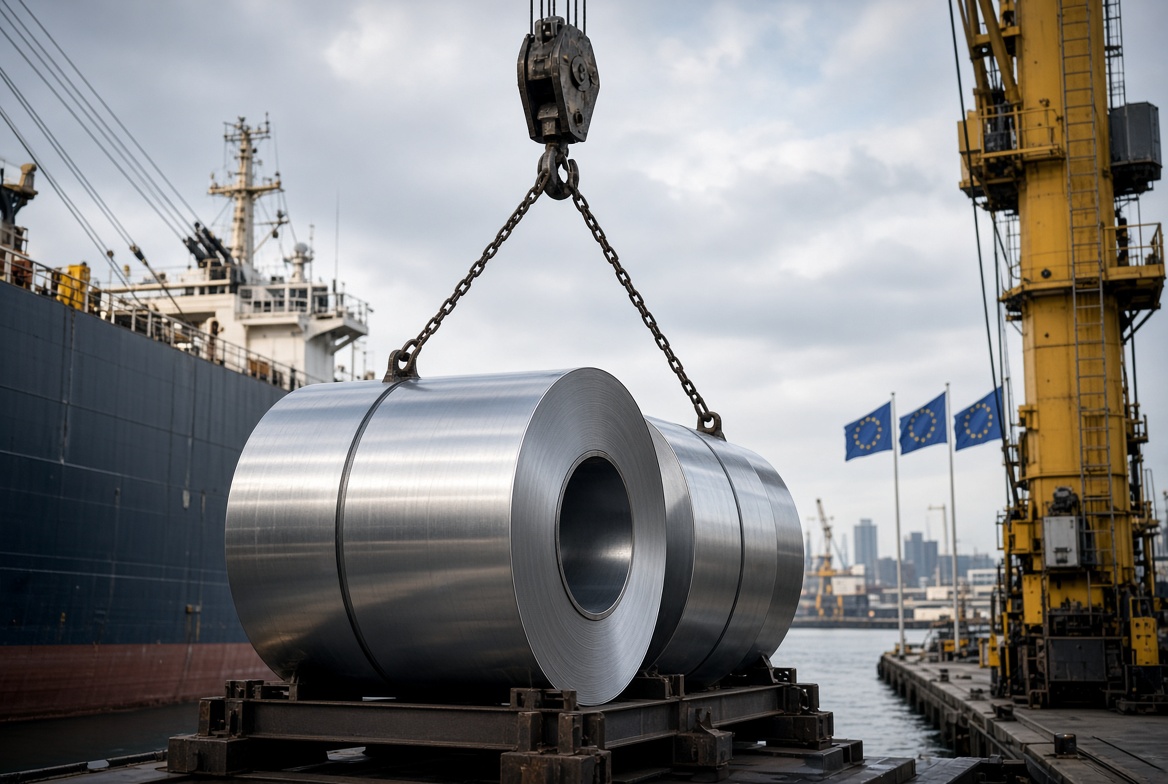
Goods may be blocked at customs if they do not comply with the European Union Deforestation Regulation, known as the EUDR. This risk especially affects importers of products linked to coffee, cocoa, wood, rubber, soy, palm oil, cattle and derived products.
In order to place these products on the European Union market, it is not enough to submit the usual commercial documents. Companies must also prove that the goods are deforestation-free and that they comply with the laws of the country of production. If documents are missing, or if there are doubts about the origin, traceability or customs code of the product, the goods may face delays, additional checks or customs detention. In this article, we explain in detail what companies need to know about the European Union Deforestation Regulation, the EUDR, and the goods affected by it.
What is the EUDR Regulation and why can it block goods?
The EUDR is the European Union Regulation that sets the conditions for placing, selling or exporting certain products. Its purpose is to reduce the European Union’s contribution to deforestation, greenhouse gas emissions and biodiversity loss. The Regulation itself states that it applies to products that contain, or have been produced using, certain raw materials. These are cattle, cocoa, coffee, oil palm, rubber, soy and wood.
If a product enters or leaves the European Union market, the authorities may check whether the goods are covered by the required documentation and whether they comply with the Regulation. The Regulation can be summarised in three main rules that make the import or export possible. First, the products must be deforestation-free. Second, they must have been produced in accordance with the relevant legislation of the country of production. Third, they must be covered by a due diligence statement.
The EUDR does not only affect raw materials
The Regulation also applies to certain derived products. For example, it may affect chocolate and food preparations containing cocoa, coffee, rubber tyres, wooden furniture, paper, wood products, bovine leather, and certain food or industrial products. A processed product may still fall under the Regulation if it contains, or has been made using, a relevant raw material.
Customs clearance or export does not guarantee EUDR compliance
Exporting goods does not automatically mean that they comply with European Union law. The Regulation makes clear that release for free circulation or export should not be considered proof of compliance, because it does not necessarily involve a full conformity check. This means that goods may pass one customs stage and still create problems later if the authorities detect a breach of the EUDR Regulation. The importer should not simply rely on the customs agent having submitted the declaration. It is necessary to verify that the product, the documentation, the traceability and the due diligence statement have all been correctly prepared and submitted.
Data and statistics on the EUDR, why should companies prepare?
The EUDR is part of the European Union’s response to a specific problem. Deforestation linked to the international trade of agricultural and forestry commodities. According to the FAO, global deforestation remains very high. Its latest report indicates a current deforestation rate of 10.9 million hectares per year. Although the pace has slowed, pressure on forests remains significant. The FAO has also stated that agricultural expansion causes almost 90% of global deforestation.
From a European perspective, the Regulation is based on a clear idea. The consumption of certain products in the European Union also contributes to deforestation outside Europe. The Regulation itself states that, without regulatory intervention, EU consumption and production of cattle, cocoa, coffee, palm oil, soy and wood could cause approximately 248,000 hectares of deforestation per year by 2030.
What do these figures mean for an importing company?
These figures explain why the European Union wants to control specific products linked to supply chains with a risk of deforestation: coffee, cocoa, soy, palm oil, wood, rubber and cattle, as well as certain derived products. The European Commission identifies these commodities and derived products as being linked to agricultural expansion and deforestation. For a company, this has a direct consequence: it is no longer enough to say that a product is “sustainable”, “legal” or “certified”. The company must be able to prove, with verifiable information, where the raw material was produced, whether deforestation occurred, who was involved in the supply chain and whether a due diligence statement exists. You can find more information on the European Corporate Sustainability Due Diligence Directive, known as the CSDDD, and on Directive (EU) 2024/825 against greenwashing.
Control statistics, the risk is not only theoretical
The Regulation also provides for minimum control percentages by the authorities. As a general rule, competent authorities must check at least 3% of operators placing, making available on the market or exporting relevant products. For products from high-risk countries or areas, the minimum control percentage increases to 9%. For low-risk countries or areas, the minimum control percentage is reduced to 1%. This is important because it shows that the EUDR is not only a documentary obligation. Authorities may inspect operators, products, documentation and due diligence statements submitted.
💡 In practice, a company importing products subject to the EUDR should assume that it may be inspected, especially if it works with complex supply chains, higher-risk countries, non-transparent suppliers or processed products.
Dates of the European Union Deforestation Regulation — EUDR
The EUDR will not apply to all companies at the same time. The applicable date will depend on the size of the operator. Main obligations will apply from 30 December 2026 for large and medium-sized companies, and from 30 June 2027 for micro and small companies. Micro and small companies that were already covered by the former EU Timber Regulation will have to comply from 30 December 2026.
Application for large and medium-sized companies
Large and medium-sized companies will have to comply with the EUDR from 30 December 2026. From that date, if they import, sell or export affected products — such as coffee, cocoa, wood, rubber, soy, palm oil, cattle or derived products — they will have to prove that the goods meet the three requirements mentioned above.
💡 In practice, this means that the company must have the required documentation ready before importing or exporting. If the EUDR declaration is missing, if the origin is unclear, or if the traceability of the product cannot be proven, the goods may face delays or be detained.
Application for micro and small companies
Micro and small companies will, in principle, have more time. For them, the general date will be 30 June 2027. However, in practice, many companies will not be able to wait until the last moment. Many small companies sell to larger clients, importers or distributors that will be required to comply earlier. Therefore, even if their formal obligation applies later, they may start receiving requests for information much earlier.
💡 For example, a client may ask them for information about the supplier, country of production, geolocation, traceability, customs code or reference number of the EUDR declaration.
Why should companies not wait until the application date?
The EUDR requires companies to prepare information in advance. The company must know where the product actually comes from, who produced it, in which country, on which plot or in which area, and whether the supplier can prove it. That is why waiting can create problems such as blocked goods, storage costs, delivery delays, loss of clients or breach of contract. Preparation should start before importation. Companies should review affected products, confirm customs codes, request documentation from suppliers, adapt contracts and prepare an internal EUDR protocol.
Which products may be detained under the EUDR Regulation?
The EUDR does not apply to all goods. It applies to specific products linked to seven raw materials: cattle, cocoa, coffee, oil palm, rubber, soy and wood. For this reason, goods may be detained if customs considers that they are covered by the EUDR.
Coffee, cocoa, soy, palm oil, wood, rubber and cattle
The main raw materials affected by the EUDR are: coffee, cocoa, soy, oil palm, wood, rubber and cattle. This means that companies importing or exporting these materials must check whether their products are included in the Regulation before starting the operation. It is not enough to review the invoice or the commercial description of the product.
💡 For example, Annex I includes cocoa beans, cocoa paste, cocoa butter, cocoa powder and chocolate, as well as coffee, including roasted or decaffeinated coffee. It also includes soy products, such as soybeans, flour, oil, oilcake and other residues from extraction. In the case of cattle, the Regulation may affect not only live animals or meat, but also certain bovine hides and skins.
Derived products: chocolate, furniture, tyres, leather, paper and others
One of the most common mistakes is to think that the EUDR only affects unprocessed raw materials. In reality, it may also affect processed or manufactured products.
💡 For example, a company does not need to import “pure” cocoa to be affected. It may be importing chocolate or food preparations containing cocoa. Similarly, a company does not need to import raw timber. It may be importing wooden furniture, wood articles, paper, wooden packaging, seats or prefabricated wooden buildings.
The same applies to rubber. The Regulation includes natural rubber, certain forms of vulcanised rubber and products such as new tyres, retreaded or used tyres, rubber inner tubes, gloves and other rubber products. This is important for importers of finished products. Even if the company does not directly buy wood, cocoa or rubber as a raw material, its product may fall within the EUDR if it contains, or has been manufactured using, a relevant raw material.
Composite products
Composite products are products that contain several materials, ingredients or components.
💡 For example: chocolate containing cocoa, furniture with wooden parts, industrial products containing rubber, food products with palm oil derivatives, or products containing bovine leather.
A company may think that it is importing an ordinary finished product, when customs may actually consider it to be a product covered by the EUDR. For this reason, in the case of composite products, the company should check the following before shipment: what materials the product contains, which customs code has been declared, who produced each relevant material, what the country of production is, and whether there is documentation proving compliance with the Regulation against deforestation.
Due Diligence Statement (DDS) to avoid customs detention
The Due Diligence Statement, also called the DDS or due diligence declaration, is one of the most important documents under the EUDR deforestation regulation. In practice, it is the declaration that allows the operator to tell the authorities: “I have reviewed the product, checked its origin, assessed the risk and I can state that there is no risk, or only a negligible risk, that it does not comply with the EUDR.” For this reason, if goods are subject to the EUDR Regulation — depending on the type of material involved, as explained above — and there is no valid DDS, or if the reference number does not match the goods, customs clearance may become complicated.
What does the EUDR due diligence statement involve?
Before submitting the due diligence statement, the company must have taken several steps. First, it must collect information about the product, assess the risk of non-compliance and, if there is a risk, take measures to reduce it. In simple terms, the company must be able to answer the following questions:
- What product is it importing?
- What raw material does it contain?
- What is its customs code?
- Which country does it come from?
- Where was it produced?
- Who is the supplier?
- Is there sufficient traceability, and can it be proven that the product is deforestation-free?
The Regulation itself requires the declaration to include information such as the name of the operator, the EORI number, the Harmonised System code, the description of the product, the quantity, the country of production and the plots where the raw materials were produced.
When must the due diligence statement (DDS) be submitted?
The due diligence statement must be submitted before placing the product on the European Union market or before exporting it.
💡 Operators may not place products subject to the EUDR on the market or export them without first submitting a due diligence statement. In addition, by submitting it, the operator assumes responsibility for the product’s compliance with the Regulation.
For products entering the EU market, the DDS reference number — or the identifier of the simplified declaration, where applicable — must be included in the relevant customs declaration. This means that companies should not wait until the goods arrive at the port, airport or customs warehouse before preparing the documentation. If the company does not have the declaration ready on time, problems may arise.
Can one due diligence statement cover several shipments?
One DDS may cover several lots or several shipments, provided that the legal requirements of the EUDR are met.
💡 For example, it may be used when a product is progressively placed on the market over a period of time. However, the company must ensure that due diligence has been carried out for all products covered and, once the quantity included in the DDS has been used, a new declaration must be submitted for any additional quantities.
This is useful for companies that regularly import similar products, but it also requires internal control. The company must monitor which quantities are covered by each due diligence statement, which lots are included, and which documents justify each origin.
How should you act if your goods are detained under the EUDR?
When goods are detained because of an EUDR issue, the most important thing is to quickly identify the source of the problem. The EUDR allows the authorities to take immediate measures when they detect a possible breach, including suspension of the placing of the goods on the market, suspension of export or even seizure of the affected products.
Step 1 | Identify the exact cause
It is not enough to know that there is “an EUDR problem”. The company must ask the freight forwarder, customs agent or competent authority for a clear explanation of the reason for the detention.
| Possible cause of detention | What it means in practice | What should be checked immediately |
|---|---|---|
| Lack of due diligence statement | The DDS was not submitted before import or export | Check whether a DDS exists and whether it was submitted on time |
| Incorrect DDS reference number | The number does not exist, has been entered incorrectly or does not correspond to the goods | Check the DDS number and its link with the shipment |
| Error in the customs code | The product may have been incorrectly classified | Review the HS code, CN/TARIC code and Annex I |
| Doubts about the country of production | The authority is not clear where the raw material was actually produced | Review certificates, supplier information, country of production and traceability |
| Lack of geolocation | The production plots or establishments have not been correctly identified | Review coordinates, polygons and supplier documentation |
| Contradictory documentation | The invoice, packing list, DDS or customs declaration do not match | Compare all documents in the operation |
| Suspicion of non-compliant product | The authority considers that there may be a risk of deforestation or breach of applicable law | Prepare evidence of origin, legality and absence of deforestation |
| Risk-based control | The product, supplier or country of production triggers a risk alert | Analyse risk criteria, supplier history and country of origin |
This first diagnosis is important because the strategy will depend on the cause.
Step 2 | Check whether the product is subject to the EUDR
The second step is to verify whether the goods actually fall within the scope of the Regulation. The EUDR applies to products listed in Annex I that contain, have been fed with, or have been made using raw materials such as cattle, cocoa, coffee, oil palm, rubber, soy and wood.
For this reason, the company must review the product, its composition and its customs code. In many cases, the problem comes from an incorrect classification. A company may think that it is importing a finished product that is not affected, but the customs code may place it within Annex I. The opposite may also happen: the authority may consider that the EUDR applies when, in fact, the product is not included.
| Practical question | Why it matters |
|---|---|
| What product does the company import, sell or export? | The commercial description may not match the legal classification |
| What raw material does it contain? | It may contain cocoa, rubber, wood, soy, palm oil or another affected material |
| What is the HS, CN or TARIC code? | Annex I is based on customs codes |
| Does the product appear in Annex I? | If it does not appear, it may fall outside the EUDR |
| Is it a composite or processed product? | It may be affected even if it is not a pure raw material |
Step 3 | Identify the company’s role in the supply chain
The company must then determine whether it acts as an operator, trader, importer, exporter, distributor or foreign supplier. This distinction is important because the obligations are not always the same. The Regulation considers an operator to be a person who places relevant products on the market or exports them in the course of a commercial activity. A trader, on the other hand, is a person who makes relevant products available on the market within the supply chain without being the initial operator.
| Company’s situation | Practical consequence |
|---|---|
| EU importer | It will usually have to prepare or have access to due diligence before importing |
| Exporter from the EU | It must verify compliance before exporting |
| EU distributor | It may need to keep information and DDS reference numbers |
| Foreign supplier | It must provide traceability, origin and documentation to the EU importer |
| Non-SME company | It may have reinforced due diligence and information obligations |
| SME | It may benefit from simplified obligations in certain cases, but it is not completely outside the system |
Step 4 | Review the due diligence statement
If the product is subject to the EUDR, the next step is to review the Due Diligence Statement, or DDS. The Regulation requires operators not to place affected products on the market or export them without first submitting this statement. By submitting it, the operator assumes responsibility for the product’s compliance with the EUDR.
Therefore, it is necessary to check whether the DDS exists, whether it was submitted, whether the reference number is correct, whether it covers exactly the detained goods, whether it matches the imported quantity, whether it corresponds to the country of production and whether the declared data are consistent with the rest of the documents. If the DDS relates to another lot, another quantity, another supplier or a different code, it may not be sufficient to release the goods.
Step 5 | Review the documentation
Many detentions do not occur because all documents are missing, but because the documents do not match each other. The Regulation requires information on the product description, quantity, country of production, geolocation, supplier, customer and verifiable evidence of compliance.
| Document | What should be checked |
|---|---|
| Commercial invoice | Product, supplier, buyer, quantity, value and country of origin |
| Packing list | Quantity, weight, lots, packaging and consistency with the invoice |
| Transport document | Route, origin, destination and shipment details |
| Customs declaration | Customs code, declarant, MRN and customs procedure |
| DDS | Reference number, product covered, quantity and country of production |
| Certificate of origin | Consistency with the DDS and commercial documentation |
| Contract or purchase order | Product sold, delivery terms and supplier obligations |
| Supplier documentation | Traceability, production, local legality and geolocation |
Step 6 | Collect traceability evidence
In practice, many detentions occur not because everything is missing, but because the documents do not tell the same story.
💡 For example, the invoice may indicate one origin, the packing list another, the DDS may mention a different country of production, the supplier may not match, or the declared quantity may not cover the full shipment.
The Regulation requires the information collected to include, among other elements, the product description, quantity, country of production, geolocation of the plots, supplier, customer and verifiable evidence that the product is deforestation-free and complies with the legislation of the country of production. For this reason, documentary consistency is important. If the documents do not tell the same story, the authority may consider that there is a risk.
Step 7 | Prepare a legal response
Once the cause has been identified and the documentation reviewed, a response must be prepared. This response should legally explain why the goods may be released, corrected or excluded from the scope of the EUDR. Depending on the case, the response may argue that the product is not included in Annex I, that the customs code used is correct, that the DDS covers the shipment, that the defect is purely formal, that the traceability information is sufficient, that the risk is non-existent or negligible, or that the detention should be lifted because the necessary documentation has already been provided. The Regulation allows the authorities to physically examine products, carry out technical analyses or use observation data. For this reason, the response must be technical and properly documented.
Foreign companies selling in the EU
The EUDR does not only affect European companies. It also directly affects foreign companies that sell products on the European Union market. Even if the supplier is outside the EU, the European importer will have to prove that the goods comply with the EUDR. If a company established outside the Union places products on the market, the company established in the EU that sells those products will be considered the “operator” for the purposes of the Regulation. This means that many European importers will start requesting more information from their foreign suppliers before purchasing, shipping or clearing goods through customs.
Information required by the European importer
The European importer will not be able to limit itself to requesting an invoice or a certificate of origin. If the product is subject to the EUDR, precise information will be required.
💡 In practice, the importer may ask the foreign supplier for information about the product, the country of production, the original supplier, the quantity, the geolocation of the plots, the traceability of the lot, and whether the product complies with the legislation of the country of production.
The Regulation requires this type of information to be collected before affected products are placed on the market or exported. For this reason, the foreign supplier must be prepared to answer very specific questions: where the raw material comes from, who produced it, on which plots or establishments, which documents prove its origin, and how it can be demonstrated that there was no deforestation.
Contractual and documentary adaptation
Foreign companies selling to the EU should adapt their contracts and commercial documents. The contract with the European importer may include specific clauses on the EUDR.
💡 Examples of clauses: obligation to provide traceability documentation, obligation to provide geolocation coordinates, guarantee of compliance with local legislation, cooperation in the event of a customs inspection, and liability if the information provided is false, incomplete or late.
It is also advisable to prepare a documentary file for each product or lot. This file should allow the European importer to complete its due diligence and, where applicable, submit the relevant declaration. Due diligence is a process that includes collecting information, assessing the risk and reducing that risk until it is non-existent or negligible.
💡 In other words, the foreign supplier must move from a traditional commercial approach — price, quantity and delivery — to a traceability-based approach: origin, plot, supplier, evidence, lot and verifiable documentation.
Could the EUDR become a practical barrier to access to the European market?
The EUDR may become a practical barrier to access to the European market. Not because it prohibits sales from third countries, but because it requires companies to prove that the goods meet specific conditions before entering the market. For products such as coffee, cocoa, wood, rubber, soy, palm oil, cattle, leather, chocolate, tyres, paper or wooden furniture, the lack of documentation may prevent or delay the operation. For this reason, foreign companies that want to continue selling in the EU will need to prepare EUDR documentation before shipment, coordinate with the European importer and ensure that each lot can be traced and justified. To have more information, see our article on International Trade between Latin America and the European Union.
💡 Suppliers that can prove traceability, origin and compliance will have a commercial advantage. Those that cannot do so risk having their products rejected, their contracts cancelled or their goods blocked at the European border.

Clauses in international contracts on the EUDR Regulation
The EUDR should not only be managed at customs level. It should also be included in international sales, supply, distribution and manufacturing contracts. For this reason, contracts with suppliers should include specific clauses on EUDR compliance.
Compliance warranty clause
The contract should include an express warranty that the products comply with the EUDR. This clause allows the importer to hold the supplier liable if the goods are later blocked because the information provided was incorrect.
Documentation delivery clause
The contract should also require the supplier to provide the EUDR documentation before shipment, not when the goods have already arrived at the port. If the product reaches customs and information is missing, the company will have less room to react and may suffer storage costs, delays or penalties. This clause would prevent the supplier from providing only a generic sustainability statement.
Geolocation and traceability clause
Geolocation is one of the most sensitive points under the EUDR Regulation. The Regulation requires information on the plots where the relevant raw materials were produced. For this reason, in products such as cocoa, coffee, wood, rubber, soy, palm oil or cattle, the contract should provide that the supplier must provide sufficiently precise data on the origin of the raw material. This clause is especially important when the supplier works with cooperatives, intermediaries, factories that mix lots, or complex supply chains.
Cooperation clause in the event of inspection or detention
If the goods are detained, the importer will need a quick response from the supplier. For this reason, the contract should impose a duty to cooperate. This clause can be decisive. In a customs detention, waiting a week for the supplier to respond can multiply the costs.
Liability and indemnification clause
The contract should state who bears the damages if the goods are blocked because of the supplier’s fault. The clause should cover not only the value of the goods, but also additional costs such as storage, demurrage, freight forwarder costs, legal costs, penalties imposed by clients, additional transport, loss of margin or destruction of the goods if necessary. This clause allows the importer to shift the risk to the supplier when the blockage is caused by incorrect documentation or lack of cooperation.
Right to suspend or cancel the order
The importer should also reserve the right to suspend the order if the supplier does not provide the EUDR documentation before shipment. This clause is very useful because it prevents the importer from being forced to accept goods that cannot be properly cleared in the European Union.
Document retention clause
The EUDR requires due diligence documentation to be kept for a specific period. Contracts should also require the supplier to keep its own documents and allow access to them if the authority requests them. This allows the importer to respond to later checks, not only to the initial customs clearance.
Clause on changes in the supply chain
Another important point is to prevent the supplier from changing the origin, farm, producer or raw material without prior notice. This clause prevents the buyer from preparing a DDS based on one supply chain and then receiving goods from a different origin.
What can we do as lawyers in an EUDR customs detention?
When goods are detained because of an EUDR issue, our legal team analyses whether the Regulation applies, reviews the documentation, prepares legal arguments and coordinates a rapid response to try to release the goods or reduce the impact of the detention. This is important because the EUDR allows authorities to take immediate measures where there are indications of non-compliance, including suspension of the placing of the goods on the market, suspension of export or even seizure of the affected products.
Urgent analysis of whether the EUDR applies
The first step is to check whether the goods are actually subject to the EUDR. Not all products indirectly linked to wood, cocoa, rubber, soy, palm oil, coffee or cattle are automatically affected. It is necessary to review the specific product, its composition, its customs code and its inclusion in Annex I of the Regulation.
💡 For example, a Portuguese company may import office tables from Vietnam. At first sight, the issue may seem purely customs-related or logistical. However, if the tables are made of wood and the customs code is included in Annex I, the EUDR may apply. In that case, it will be necessary to prove the origin of the wood, the geolocation of the production area and the absence of deforestation.
The opposite may also happen. Imagine a company importing industrial machinery packed in wooden crates. If the wood is used only as packaging to protect or transport another product, it may be necessary to analyse whether this is truly a product subject to the EUDR or merely an accessory transport element. In this type of case, a lawyer can help argue that the detention is not justified if the main product is not included in the Regulation.
Review of customs documentation and DDS
If the product is subject to the EUDR, the next step is to review the documentation. The most important document is the due diligence statement, also known as the DDS. The Regulation requires operators not to place relevant products on the market or export them without first submitting this statement. In addition, by submitting it, the operator assumes responsibility for the product’s compliance with the EUDR. Our firm verifies whether the DDS was submitted on time, whether the reference number is correct, whether it covers exactly the detained goods and whether it matches the customs declaration, the invoice, the certificate of origin and the supplier’s documents.
💡 For example, a company imports green coffee from Colombia. The DDS exists, but the reference number indicated in the customs declaration corresponds to a previous lot. In that case, there may not be a substantive issue with the traceability of the coffee, but rather a documentary linking error. The strategy will be to prove that there is a valid DDS for the detained lot and request the relevant correction or clarification.
Arguments for release
Once the file has been reviewed, we prepare the arguments to request the release of the goods, the correction of the documentation or another appropriate solution. The aim is to explain in an organised way why the detention should be lifted or limited. The arguments may vary depending on the case. It may be argued that the product is not included in Annex I, that the customs classification used by the authority is incorrect, that the DDS properly covers the shipment, that the defect is formal and can be corrected, that the traceability is sufficiently proven, or that the risk identified is non-existent or negligible.
💡 For example, a company imports chairs from Morocco. The authority blocks the shipment because it considers them wooden furniture subject to the EUDR. However, after reviewing the technical data sheet, it appears that the main structure is metal and that the wood is a minor component not included in the declared classification. In that case, the argument may focus on the correct classification of the product and on the non-application of the Regulation to those specific goods.
Communication with operators and authorities
Several parties are usually involved in an EUDR detention: importer, foreign supplier, customs agent, freight forwarder, customs authority and competent EUDR authority. If each party responds separately and without coordination, contradictions may arise and complicate the file. We centralise the response and organise the communication. This helps avoid incomplete explanations or contradictory documents.
💡 For example, the freight forwarder may say that the problem is “the lack of DDS”, while the customs agent indicates that a DDS does exist but that the customs code does not match. At the same time, the foreign supplier may send a generic statement saying that “everything complies with European rules”, without providing coordinates or traceability. In such a situation, the lawyer must separate the real problem from the documentary noise: request the MRN, review the status of the DDS, confirm the code used and require the supplier to provide the specific missing documentation.
Contracts and claims
An EUDR detention may also create contractual liability. If the goods are blocked because the supplier did not provide correct information, the importer may suffer storage costs, delays, penalties imposed by clients, loss of margin or even cancellation of orders.
💡 For example, a European company buys cocoa from a foreign supplier. The contract provides for delivery at a European port, but does not include any clause on the EUDR, geolocation or traceability. When the goods arrive, information on the production plots is missing and customs clearance is delayed. In that case, it will be necessary to review the contract, the Incoterms, the supplier’s warranties and the previous communications to determine whether damages can be claimed.
For this reason, we do not only intervene before the authority. We also review whether it is possible to bring a claim against the supplier, the seller, the intermediary or even analyse the liability of the agent who incorrectly prepared the documentation.
Preventive EUDR protocol
The most effective intervention is not always the urgent one, but the preventive one. A company that regularly imports affected products should have an internal protocol before shipping goods. That protocol should make it possible to answer key questions: whether the product is affected, which customs code applies, which raw material it contains, who the supplier is, what the country of production is, whether geolocation coordinates exist, whether there is evidence of absence of deforestation, whether the DDS is ready and whether the customs agent has the correct reference number.
💡 For example, a company that imports coffee every month can create an internal checklist so that it does not accept any lot without farm data, supplier information, country of production, traceability and sufficient documentation. This helps avoid discovering the problem only when the container has already arrived at port.
Practical success cases under the EUDR Regulation
The following examples show common situations in which a company may find that its goods are blocked or delayed because of the EUDR. In this type of case, our work consists of identifying the problem, reviewing the documentation, preparing a legal response and coordinating the strategy with the importer, the supplier, the customs agent and the freight forwarder.
Case 1 | Chocolate detained because of the country of production of the cocoa
A European company imported chocolate bars from Ecuador to sell them in several European Union countries. The goods were detained because the commercial documentation indicated Ecuador, but the information provided mentioned cocoa partially produced in Peru.
What did we do? In this case, we reviewed the invoice, the packing list, the certificate of origin, the customs declaration and the supplier’s documentation. We prepared a response explaining the difference between country of dispatch, commercial country of origin and country of production of the raw material. We also requested from the supplier the traceability of the cocoa, the data relating to the plots and the documentation needed to justify that the product complied with the Regulation. The EUDR requires information on the country of production, geolocation and evidence of compliance.
Case 2 | Wooden furniture blocked because of doubts about the customs code
A company imported tables, shelves and wooden furniture from Asia. The authority considered that the shipment could be subject to the EUDR and requested documentation on the origin of the wood. In this type of case, we first analyse whether all the products are actually included in the Regulation. We review the HS/CN code, the composition of the product, the technical data sheet, the customs declaration, Annex I and the supplier’s documentation.
This point is important because the EUDR does not only affect raw timber. It may also affect certain wood products, furniture, paper and other derived products included in Annex I. Our intervention had two objectives. Since part of the product was subject to the EUDR, we helped complete the file. However, since another part of the shipment was not subject to the Regulation, we legally argued that those goods should not remain blocked under the EUDR.
Case 3 | Tyres detained because of lack of traceability of natural rubber
A Spanish company imported tyres from Thailand to distribute them in the European Union. The supplier provided a generic statement saying that the product was sustainable, but did not provide information on the natural rubber used.
In this case, we reviewed the contract, the emails with the supplier, the customs declaration, the DDS, the customs code, the product’s technical data sheet and the transport documents. We then identified what was missing. The country of production of the rubber, traceability by lot, the original supplier, geolocation and verifiable evidence. The problem was not the quality of the tyre, but the lack of traceability of the raw material.
Case 4 | Roasted coffee detained
A European company imported roasted coffee from Brazil to sell it in gourmet shops, supermarkets and online platforms. The company believed that the EUDR only applied to green coffee or unprocessed coffee beans. However, the Regulation may also apply to roasted or decaffeinated coffee. In this case, the goods were detained because the Brazilian supplier only provided an invoice. It did not provide information on the farms, cooperatives or plots from which the coffee came. We reviewed the customs code, the DDS, the commercial documentation, the traceability of the lot and the communications with the supplier. We then identified the real problem and requested additional documentation from the supplier.
📈 Practical value for companies: before importing coffee, it is not enough to know the country of dispatch. It is necessary to check whether there is real traceability up to the country and area of production.
Case 5 | Food products or products containing palm oil derivatives
A company imported biscuits, creams, soaps or cosmetic products manufactured outside the EU. At first sight, the final product did not appear to be a sensitive forestry or agricultural product. However, it contained palm oil derivatives. In this case, we reviewed the composition of the product, the customs code, the technical data sheet and the supplier’s documentation. The EUDR Regulation includes oil palm and certain derived products. The practical problem is that many companies do not see the EUDR risk because they buy a finished product, not raw palm oil. However, if the product falls within an affected category, it may be necessary to prove the traceability of the raw material.
The EUDR Regulation must be prepared before shipment — do you need help?
The EUDR Regulation changes the way certain products are imported, sold and exported in the European Union. For companies, the real question is whether they can prove that the product is deforestation-free. For this reason, preparation must be done in advance. At Arthur & Marin, we specialise in European Union Law, Customs Law and International Trade Law.
We review the DDS declaration, the customs code, traceability, supplier documentation and the customs declaration in order to prepare a strategy to release the goods. We also assist importing and exporting companies in preventing future detentions through EUDR contracts, supplier reviews and internal protocols before shipment. If the goods are already detained, the priority is to act quickly and contact us as soon as possible in order to seek the release of the goods.
Contact us by email at info@arthurmarin.com or by phone at +32 465 345 345 for an urgent review of the file.
💡 We help importers, exporters and international suppliers prevent EUDR blockages, review contracts and act urgently when goods are detained at customs.