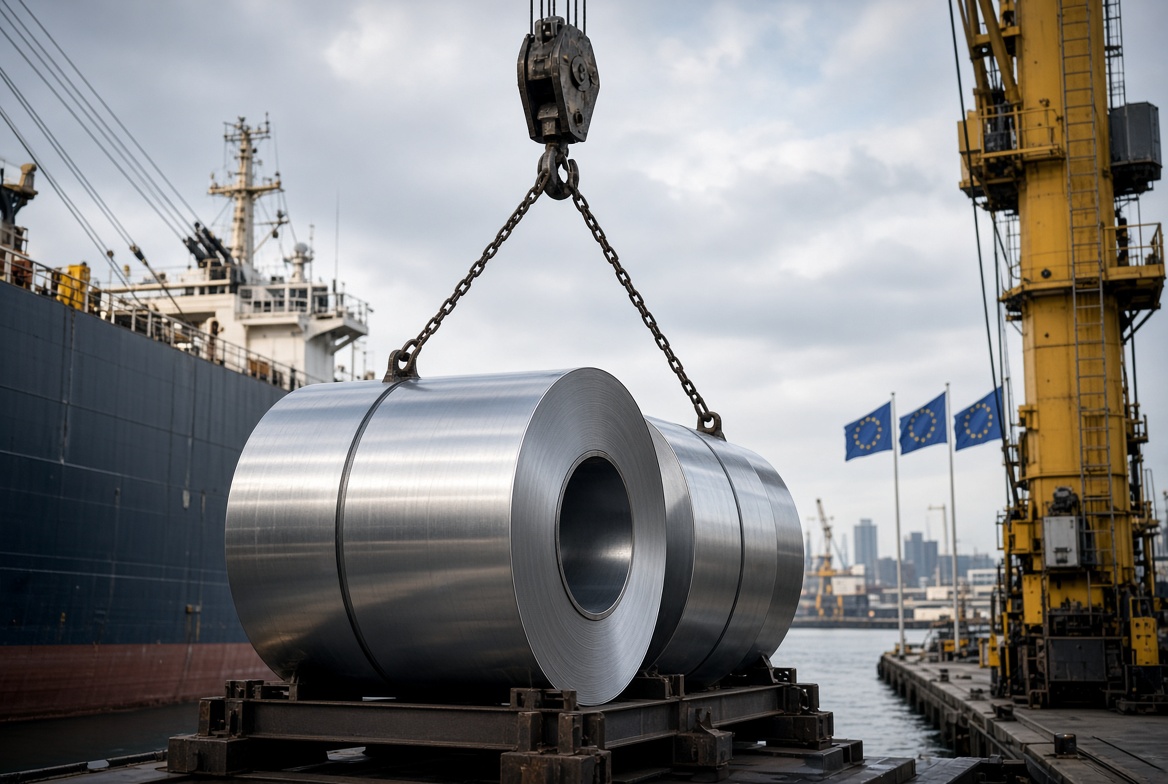
The purpose of this report is to provide a detailed legal analysis and strategic framework in response to the entry into force of Implementing Regulation (EU) 2025/1711. This regulation imposes provisional anti-dumping duties on the importation of seamless high-pressure steel cylinders originating from the People’s Republic of China, with a general rate that may reach up to 118%. For key players in the manufacturing and distribution of fire protection systems, these measures directly affect their supply chain, costs, and planning.
The analysis will focus on the temporary application of the duties, the risk of retroactivity of definitive measures, the post-clearance recovery procedures by customs authorities, and the documentary requirements to qualify for an individual duty rate.
Relevant legal framework for anti-dumping duties on steel cylinders in the EU
Below is a list of the European regulations applicable to this specific product, provided as information within the relevant legal framework:
Implementing Regulation (EU) 2025/1711
Published in the Official Journal of the European Union with an expressly indicated date of entry into force: 7 August 2025. The publication and entry into force determine the moment from which the customs authorities of the Member States must collect the duty on the affected imports.
Regulation (EU) No. 952/2013 | Union Customs Code (UCC)
Defines the customs debt on importation (Articles 77 et seq.). It establishes that the debt arises when the goods are released for free circulation (acceptance of the customs declaration). The creation of the debt, and therefore the obligation to pay duties, does not depend on the date of the order, sales contract, shipment, or invoice, but on the date of acceptance of the import declaration.
Basic anti-dumping Regulation (EU) 2016/1036
Regulates the temporal effects of provisional and definitive measures (Articles 7, 10, 14). It establishes that provisional measures have no retroactive effect except in the specific circumstances provided therein.
Accrual of the customs debt as the legal basis for provisional anti-dumping measures
Regulatory context | Regulation (EU) 2025/1711 and legal nature
Regulation (EU) 2025/1711 establishes a legal framework for the application of provisional anti-dumping duties on the importation of steel cylinders of Chinese origin. This regulation entered into force on 7 August 2025, from which date the customs authorities of the Member States are required to levy the duty on the affected imports.
The application of anti-dumping duties does not depend on when the order was placed but on a fundamental concept of Union customs law: the “accrual of the customs debt.” This is the precise legal moment at which the obligation to pay the applicable duties and charges arises, and it is detached from earlier commercial stages such as the date of the sales contract, the date of payment, or the shipping date of the goods.
Principle of accrual of the customs debt
For an importation into the European Union, the taxable event giving rise to the customs debt occurs unequivocally at the moment when the goods are released for free circulation, that is, when the customs declaration is accepted by the authorities. This principle is enshrined in Article 77(2) of the Union Customs Code (UCC, Regulation (EU) No. 952/2013). This moment is analogous to the “notarial moment” in a real estate transaction: the obligation to pay taxes arises upon the signing of the document before the notary and its subsequent registration, not when the price is agreed. We invite you to review our article on the New Union Customs Code and our specialized guide on How to Import Products from Belgium.
Consequently, any order for steel cylinders placed before 7 August 2025 is still subject to the new anti-dumping duties on steel cylinders of Chinese origin. Union customs law gives primacy to the moment of customs clearance over any other commercial or logistical milestone. The case law of the Court of Justice of the European Union (CJEU) has reinforced this principle, as evidenced in the Tauritus UAB Case, C-782/23. In this judgment, the Court confirmed that the determination of the customs value is based on the date of acceptance of the declaration, even if the final price was not known at that time, underscoring the primacy of customs facts over private commercial agreements.
Enforceability of provisional anti-dumping duties
With respect to the enforceability of provisional anti-dumping duties, it should be recalled that the applicable legal framework is found in the Basic Anti-Dumping Regulation (EU) 2016/1036. Article 7(3) expressly provides:
“Provisional duties shall be secured by a guarantee and the release for free circulation in the Union of the products concerned shall be conditional upon the provision of such guarantee.”
Therefore, while provisional measures remain in force, the importer is not required to definitively pay the amount of the duties at the time of customs clearance, but only to secure it through a deposit or guarantee.
Customs procedure and practical effects
In the European Union, Customs requires the provision of such guarantee in the Single Administrative Document (SAD) when clearing the goods, but does not execute the definitive collection until the Commission adopts the final regulation. If the definitive duty matches the provisional one, the guarantee becomes payment. If the definitive duty is lower, the corresponding part is released. Under no circumstances will the importer be required to pay any difference if the definitive duty is higher than the provisional duty.
Therefore, while Regulation 2025/1711 remains in force, the importer is only required to provide a guarantee for the amount of the provisional anti-dumping duties on steel cylinders, but not to make a definitive payment. The final disbursement will only take place once the European Commission adopts the definitive measures, at which point the amount will be adjusted according to the final outcome of the investigation.
Furthermore, the maximum duration of provisional duties is established in Article 7(6) of the Basic Regulation, which provides that such duration may not exceed a total of nine months.
Retroactivity and the risk of post-clearance anti-dumping assessments
Principle of non-retroactivity and legal exceptions
Regulation (EU) 2025/1711, in its nature as a provisional measure, does not itself apply retroactivity. However, the Basic Regulation (EU) 2016/1036 provides for the possibility that definitive duties, once established, may be applied retroactively for up to 90 days prior to the date of entry into force of the provisional measures.
The application of this retroactivity is subject to the concurrence of four cumulative conditions, set out in Article 10(4) of the Basic Regulation. For retroactivity to occur, the Commission must determine that:
- The imports were subject to a prior customs registration, giving importers the opportunity to present their observations;
- There has been a history of dumping that caused injury to the Union industry;
- There was an additional and substantial increase in imports during the registration period; and
- Such increase, by its volume and timing, threatens to undermine the remedial effect of the definitive measure.
The registration of imports, ordered by Regulation 2025/531 of 24 March 2025, is an indispensable condition for retroactivity to be possible.
The case law of the CJEU, such as in the Paltrade EOOD Case, C-667/11, has confirmed that the absence of customs registration in accordance with the regulation is an obstacle to the application of retroactive duties, reinforcing the conclusion that the time window of risk is limited and not automatic.
Post-clearance recovery procedure (post-clearance entry in the accounts)
Beyond the risk of retroactivity, the importer faces the possibility that customs authorities may recover anti-dumping duties on steel cylinders after clearance if they were not collected at the time of importation.
The failure to collect a duty at the time of clearance, whether due to an administrative error or operator mistake, does not extinguish the customs debt. In accordance with Articles 77 et seq. of the Union Customs Code (UCC), the obligation to pay arises at the moment of acceptance of the declaration, provided that on that date the provisional or definitive measure was in force.
Customs authorities have the power to correct, notify the debt, and claim the amount, a procedure known as “post-clearance entry in the accounts”. This procedure may be initiated at any time within the general three-year period from the date on which the debt arose, pursuant to Article 103 of the UCC.
Remedies against the notification of debt
In response to a customs debt notification, the importer has the right to file administrative appeals before the customs authorities and, subsequently, a contentious-administrative appeal before the courts. During this procedure, the importer may request a deferment or payment in instalments and, in certain cases, suspension of payment while the appeals are pending (Articles 44 and 108 UCC).
In addition, if the claim derives from a Commission Regulation imposing definitive duties with retroactive effect, it is possible to file an action for annulment before the Court of Justice of the European Union under Article 263 TFEU. However, the standing of individuals to challenge regulations of general application is restrictive and requires proof that the act affects them directly and individually (Plaumann doctrine).
Conditions for valid retroactivity
For such retroactivity to be valid, two cumulative conditions must be met:
- There must have been a substantial increase in imports during the registration period compared to the investigation period; and
- Such increase, by its volume and timing, must threaten to undermine the remedial effect of the definitive measure.
Judgments such as the De Haan Case, C-61/98, reinforce the customs authority’s power to recover duties retroactively, even in cases of irregularities, and detail the procedural safeguards that operators may invoke. This risk, combined with the possibility of retroactivity, creates a dual and systemic risk for the importer, where the customs debt may remain “in limbo” and subject to adjustment over an extended period of time.
Refund of anti-dumping duties on steel cylinders following judicial annulment of the measure
In the event that the General Court of the European Union annuls a definitive anti-dumping regulation, the recovery of duties already paid is not automatic. Importers must submit their refund request through the procedures established by the Union Customs Code (UCC). Article 121(1)(a) of the UCC provides a three-year period to request the refund, calculated from the date of notification of the customs debt. This period may be suspended if an appeal is pending. This principle has been upheld by the case law of the CJEU in the Ikea Wholesale Case, which underscores the necessity for importers to strictly comply with the procedural deadlines and requirements.

Requirements for the individual duty rate
Anti-dumping duty levels and associated TARIC codes
Regulation (EU) 2025/1711 establishes three levels of anti-dumping duties on imports of steel cylinders originating from China: individual rates for cooperating companies, rates for non-sampled exporters, and a residual rate of 118% for all other companies.
To benefit from a reduced rate, it must be duly proven that the goods originate from an exporter listed in the Annex to the Regulation and that all formal requirements are met. This proof is provided through an additional TARIC code that must be indicated in the Single Administrative Document (SAD). Annex I of Regulation (EU) 2025/1711 expressly lists these companies and their corresponding codes.
Documentary requirements and compliance strategies
To qualify for a duty rate lower than 118%, the importer must meet a series of strict documentary requirements. First, the Chinese exporter must be expressly identified in Annex I of Regulation (EU) 2025/1711. Second, the importer must indicate the exact additional TARIC code of that exporter in the customs import declaration. Any omission or incorrect entry of this code in the SAD will result in the automatic application of the residual rate of 118%. The third requirement, and the most important for the validity of the operation, is that the commercial invoice issued by the exporter must contain a specific declaration, signed and dated by a company representative. This certifies that the product was manufactured by the exporting company and that the information provided is accurate. Customs authorities have the power to verify the authenticity of these invoices and request additional documentation.
To mitigate the risk that customs may reject the application of the individual rate, the company should adopt due diligence strategies. These include, for example, direct coordination with the Chinese supplier to ensure their awareness of the documentary requirements, as well as maintaining a file containing contracts, purchase orders, and commercial correspondence linking each shipment to the authorized exporter. Consistency between the invoice, transport documents, and the SAD is necessary to avoid discrepancies.
Tariff classification: the risk of reclassification
A fundamental and often underestimated aspect is the risk of tariff reclassification by customs. Although Regulation (EU) 2025/1711 mentions specific codes, it warns that the decisive criterion is the material definition of the investigated product. Even if an importer declares its cylinders under a code not listed in the regulation, if the product characteristics match the technical definition of “seamless high-pressure bottles” covered by the measure, Customs may reclassify the goods and impose the anti-dumping duty.
The term “others” in the TARIC nomenclature serves as a residual category for products that meet the definition of the main heading but do not fit into subcategories. However, this classification does not exempt the importer from the risk of reclassification if customs determines that another classification would have been correct. Therefore, it is important to ensure that the product characteristics cannot be subject to a subsequent adjustment by the authorities (beyond the mere verification of the code).
The inward processing procedure (IPP)
Indirect risk in the global supply chain
Although anti-dumping duties apply exclusively to imports destined for the European Union market, companies engaged in re-export operations may face indirect impacts. The inward processing procedure authorizes the importation of non-Union goods into EU territory for processing without payment of anti-dumping duties or customs tariffs, provided that the resulting products are re-exported outside the EU.
IPP requires obtaining prior authorization from the customs authorities, the definition of a yield coefficient to monitor the ratio between imported goods and exported compensating products, and the provision of a financial guarantee to cover potential customs debts. The risk does not lie in the export itself, but rather in the prior phase, namely the customs treatment when goods are first introduced into the EU. If the goods are released for free circulation within the Union, anti-dumping duties on steel cylinders become payable, generating an unnecessary extra cost that undermines competitiveness in non-EU markets. Therefore, the only way to avoid this economic impact is to use a suspensive customs regime that isolates the risk of the re-export operation.
The inward processing procedure as a solution
For operations involving transformation, the appropriate mechanism is the Inward Processing Procedure (IPP), governed by Articles 256 et seq. of the Union Customs Code. This special procedure allows the importation of non-Union goods to undergo processing operations without incurring import duties or anti-dumping measures. Payment of duties remains suspended as long as the resulting products are re-exported outside the EU. Judgments of the Court of Justice of the EU, such as Eurogate Distribution (C-226/14) and DSV Road (C-187/14), have confirmed that no customs debt arises while the goods remain under a suspensive regime.
Requirements and management process of the IPP
To operate under the inward processing procedure, the company must obtain prior authorization from the tax agency. The application is submitted electronically and requires the provision of a guarantee to cover potential customs debts. Article 171 of Delegated Regulation (EU) 2015/2446 expressly establishes that, for IPP applications, the maximum decision period is 30 days.
The company must maintain complete and consistent traceability of the imported, processed, and re-exported goods. This implies keeping a record-keeping system enabling customs authorities to verify the correspondence between the imported raw material and the exported final products. Documentary consistency among invoices, contracts, transport documents, and production records is essential to avoid issues.
Furthermore, the adoption of the IPP requires thorough due diligence and formalization of internal processes. Documentation, staff training, and early preparation of the authorization request are crucial to ensure proper functioning of the procedure and to demonstrate to the authorities that the use of the regime is not intended to circumvent anti-dumping duties. This formalization of procedures aligns the company with best customs practices and positions it favorably to obtain Authorized Economic Operator (AEO) certification, a trust mark that facilitates long-term operations.
Strategic recommendations in the short and long term
Regulation (EU) 2025/1711 imposes anti-dumping duties on steel cylinders on a provisional basis which, despite their temporary nature, have a direct impact on steel cylinder import operations. The customs debt is incurred at the moment of acceptance of the declaration for release for free circulation, making the dates of the purchase order or shipment irrelevant. The company faces a post-clearance recovery risk: one stemming from errors or irregularities, and another from the possibility that definitive duties may be applied retroactively, although subject to strict conditions and the prior existence of a customs registration.
It is essential to obtain an individual duty rate, which requires strict diligence in documentation, including the correct use of the TARIC code and the statement on the invoice. The risk of tariff reclassification must be taken into account, as the product definition prevails over the declared code. Finally, for re-export operations, the Inward Processing Procedure (IPP) emerges as the only viable solution to avoid the incurrence of anti-dumping duties on steel cylinders, allowing the product to be processed without payment of levies.
Consider obtaining Authorized Economic Operator (AEO) certification, as the compliance measures required under the IPP align with the certification’s requirements and provide a trust mark that facilitates long-term customs operations.
Legal advice and defense in anti-dumping duties on steel cylinders
The anti-dumping measures on steel cylinders are a clear example of the growing complexity of the international trade environment. In this context, customs law can no longer be seen as a mere technical obstacle but as a fundamental pillar of business strategy.
The adoption of the Inward Processing Procedure (IPP), together with a strong culture of compliance and due diligence, not only helps mitigate the risks associated with anti-dumping duties but also strengthens the company’s infrastructure to face future regulatory challenges.
At Arthur & Marin, we help companies anticipate challenges, designing customized customs strategies that transform obligations into growth opportunities. Our legal team provides comprehensive advice in International Trade Law, Corporate Law, Customs Law, and European Union Law, ensuring regulatory compliance.
📩 Contact us at info@arthurmarin.com or by phone at +32 465 345 345 and discover how we can protect and enhance your business in a constantly changing global market.