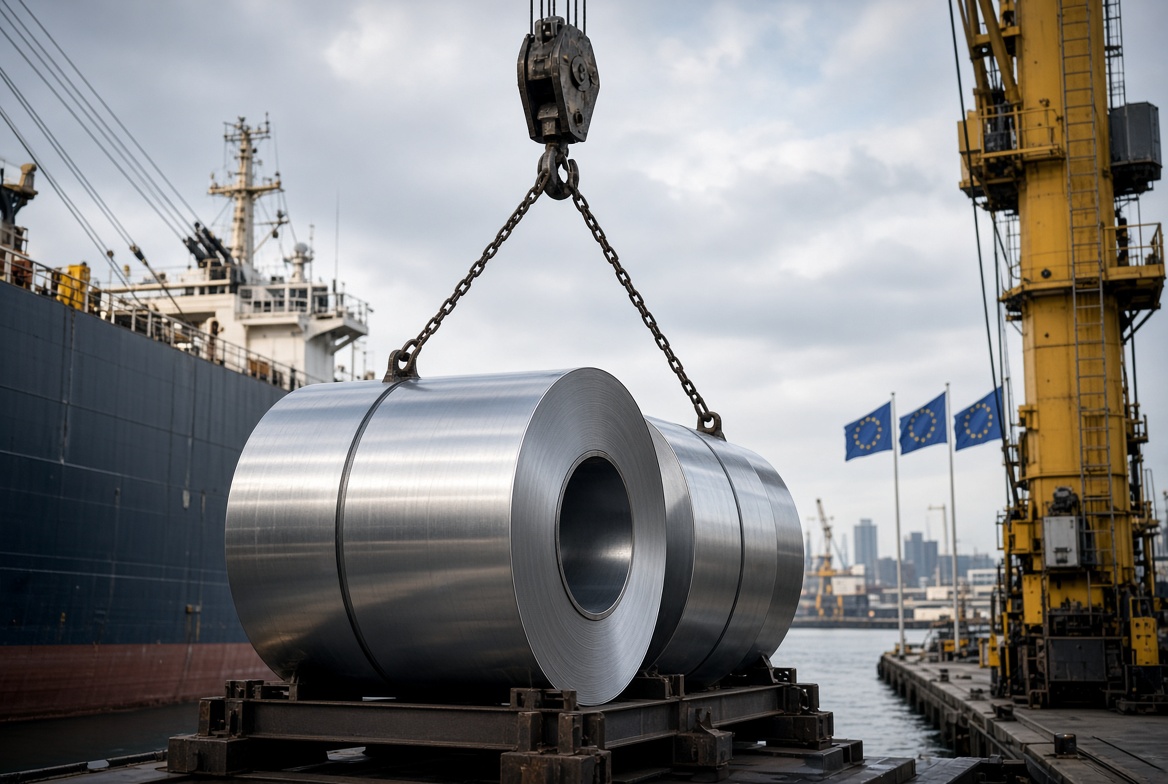
Importing products from Belgium can be an excellent business opportunity for companies seeking quality, logistical efficiency, and regulatory compliance within the European market.
However, to avoid risks, it is essential to understand the legal and tax rules that govern this type of operation. We explain how to safely import from Belgium step by step.
Why import from Belgium?
First of all, Belgium stands out due to its strategic location at the heart of Europe, allowing for quick and efficient distribution to other countries. Additionally, its ports, such as Antwerp and Zeebrugge, are among the most important on the continent, facilitating complex logistical operations.
Moreover, Belgium has a highly developed industry, especially in sectors like food, machinery, chemicals, pharmaceuticals, and technology. Importing from Belgium is not only a safe bet in terms of quality but also in terms of compliance with European standards.
What to consider when importing products from Belgium
Import license for importing products from Belgium
One of the first aspects to consider when importing products from Belgium is whether an import license is required. Although Belgium and Spain are part of the EU single market—eliminating customs duties for most goods—not all products can circulate freely.
Which products require a license or prior authorization?
Certain products are subject to specific controls for reasons of public health, national security, or environmental protection. Some of the most common include:
- Medicines and pharmaceutical products
- Alcohol and tobacco
- Pesticides and phytosanitary products
- Electronic equipment with hazardous components
- Dual-use goods (with both civilian and military applications)
Importing any of these goods without the corresponding authorization can lead to serious consequences, such as the detention of goods at customs, financial penalties, or even criminal liability.
Tip: Before signing any international sales contract, check with a legal expert whether the product falls into a restricted category under EU regulations. This simple check can save you unexpected costs and legal conflicts.
TARIC Code and tariff classification: why are they essential in imports from Belgium?
Even though no tariffs apply in intra-community operations, it is still mandatory to classify the product correctly according to the EU’s Harmonized System. This system is based on the so-called TARIC code (Tarif Intégré de la Communauté).
What is the TARIC Code and why is it so important?
The TARIC code is a numerical identifier that classifies products in a standardized manner. This code allows you to:
- Determine if anti-dumping or countervailing measures apply
- Know whether specific technical or health regulations apply
- Identify if the product requires CE marking, multilingual labeling, or special certifications
- Ensure proper customs and statistical treatment of the product
An error in TARIC classification can lead to serious consequences such as:
- Administrative surcharges
- Fines for tax or customs fraud
- Blockage of goods by Spanish authorities
🔎 Real-life example: A Spanish company importing agricultural machinery from Belgium used an incorrect TARIC code, triggering a customs investigation for potential circumvention of anti-dumping measures. Thanks to proper legal intervention, it was able to demonstrate good faith, but still faced delays and significant costs.
How to ensure proper TARIC classification?
At Arthur & Marin, we conduct a thorough technical and legal analysis to assign the exact TARIC code to each product. This includes:
- Consulting the European Commission’s TARIC database
- Verifying with the Spanish customs authority (AEAT)
- Studying sector-specific regulations (e.g., cosmetics, food, electronics)
- Drafting supporting documents in case of inspection or request
Importing products from Belgium is simple if you have the right legal support.
Tax obligations and intra-community VAT
One of the most important tax aspects when importing products from Belgium is understanding how intra-community VAT works. Unlike imports from third countries—where VAT is paid at customs—transactions between European companies are governed by the intra-community VAT system, which has its own rules.
When does intra-community VAT apply?
When a Spanish company purchases goods from a Belgian company registered for VAT, and both are registered in the Register of Intra-Community Operators (ROI), the operation is considered a VAT-exempt intra-community delivery at origin and an intra-community acquisition subject to VAT at destination. Practical example:
- The Belgian company issues an invoice without VAT.
- The Spanish company self-assesses VAT in its periodic return (form 303), and declares the operation in form 349.
💡 Important: If either company is not registered in the ROI, the VAT exemption is lost, and the Belgian supplier must apply the local VAT (21%). This causes tax complications and may affect VAT deduction.
📌 Tip: Before closing a deal, check the intra-community VAT number in the VIES (VAT Information Exchange System) database. Our firm manages this process to ensure the correct taxation of your international operations.
International sales contract and Incoterms: Legal certainty for your operation
All product imports from Belgium should be accompanied by an international sales contract that regulates the rights and obligations of the parties. Although many companies rely on email orders or pro forma invoices, a well-drafted contract is key to avoiding disputes.
What should an international sales contract include?
A legal contract should include at least the following elements:
- Clear identification of the parties and their VAT numbers
- Detailed description of the product
- Delivery deadlines and penalties for delays
- Payment terms (e.g., advance payment, documentary credit)
- Applicable language, law, and competent jurisdiction
- Transport and risk conditions: Incoterms
Which Incoterm to choose for importing from Belgium?
Incoterms (International Commercial Terms) define how costs, risks, and logistical obligations are divided between buyer and seller. Some of the most used in intra-European imports are:
- EXW (Ex Works): The buyer assumes all costs and risks from the seller’s premises.
- DAP (Delivered At Place): The seller delivers the goods to the agreed location in Spain, bearing the transport costs.
- DDP (Delivered Duty Paid): The seller assumes all costs, including taxes and duties, up to delivery at destination.
🔍 Legal recommendation: For operations within the EU, DAP is usually the most balanced option, as it avoids unnecessary logistical risks for the buyer without imposing on the seller the tax burden of the destination country, as happens with DDP.
Regulatory compliance and labelling
Finally, it is important to ensure that the imported product complies with safety and labelling regulations. Often, products that are legal in Belgium do not meet the linguistic, technical, or sanitary requirements demanded by the destination authorities. Common examples include:
- User instructions not translated into the language of the destination country
- Absence of CE marking on electronic products
- Unauthorised ingredients in food products
❗ Important: In some cases, you will be considered a “legal importer” and, therefore, directly responsible before the Spanish authorities.
Practical tips for importing products from Belgium
| Step | Tip | Key Detail |
|---|---|---|
| 1 | Communication with the supplier | Ensure clear agreements on prices, deadlines, and documentation (invoice, certificate of origin). |
| 2 | Regulatory verification | Review legal requirements of the destination country: labelling, safety, CE approvals, etc. |
| 3 | Incoterm selection | Define responsibilities in transport and delivery: EXW, CIF, DDP, etc. |
| 4 | Specialised logistics operator | Choose a company experienced in intra-Community trade to avoid logistical errors. |
| 5 | Tax obligations | Declare transactions correctly (Form 349, Form 303 in Spain) and keep supporting documents. |
| 6 | Monitoring and document control | File all documents and track each phase of the import process. |
European regulations on the import of products into the EU
Importing products requires strict compliance with the European regulations applicable to each sector. This includes key regulations such as:
- REACH Regulation for the control of chemical products
- Food safety directives like Regulation (EC) 178/2002
- Energy labelling and electronic product rules, in line with Directive 2010/30/EU
Complying with these regulations ensures the swift acceptance of goods in the European Union and protects your company’s reputation.
In addition, it allows you to anticipate technical requirements, optimise import processes, and improve your competitiveness in the European market. Visit our articles on European Union Law and Legal Reports in European Law.
Planning to import products from Belgium? Do it with legal support
Importing products from Belgium can grow your business, but every mistake can result in delays, fines, or financial losses. We help you minimise risks and maximise benefits: we draft your international contracts, verify European regulatory compliance, and design your strategy.
Visit our page on lawyers specialised in Corporate Law and International trade law.
Want to import with legal guarantees and no surprises? Contact us today.
📞 Phone: +32 465 345 345
📧 Email: info@arthurmarin.com
💡 Your operation begins with one decision: count on the legal team that will make the difference.