In Belgium, the Road Code governs traffic violations, and authorities impose sanctions based on the severity of each case. Offenders may face consequences ranging from simple fines to license suspensions, which can significantly impact their daily lives.
Therefore, this article provides an overview of traffic violations and explains the processes involved in addressing them.
Categories of traffic violations in Belgium
Belgium classifies traffic violations into four degrees based on their severity:
- First-degree violations: These are the least serious, such as illegal parking, failure to present documents during a check, not wearing a seatbelt, or not using turn signals. Penalties: Fines from 80 EUR to 2,000 EUR, or possible driving disqualification for 8 days to 5 years in cases of repeat offenses after three convictions.
- Second-degree violations: These involve behaviors that may directly endanger the safety of other users, such as crossing a continuous white line, failing to yield, or running a red light. Penalties: Fines from 160 EUR to 2,000 EUR (doubled in case of repeat offenses within three years). Possible disqualification of the right to drive for 8 days to 5 years.
- Third-degree violations: These are serious offenses, such as running a red light, significant speeding, or stopping a vehicle on railroad crossings. These violations can cause severe accidents. Penalties: Fines from 240 EUR to 4,000 EUR (doubled in case of repeat offenses). Possible disqualification of the right to drive for 8 days to 5 years.
- Fourth-degree violations: These are the most serious violations, involving dangerous or deliberately negligent behaviors, such as driving under the influence of alcohol or drugs. Penalties: Fines from 320 EUR to 4,000 EUR. Disqualification of the right to drive for 8 days to 5 years. Belgian drivers are automatically summoned to appear before the Police Court.
Summary of the degrees of traffic offences in Belgium
| Degree | Description | Examples | Penalties |
|---|---|---|---|
| First-degree | Minor infractions that do not directly endanger others | – Illegal parking- Not wearing a seatbelt- Failure to present documents- No turn signals | – Fine: €80 to €2,000– Disqualification: 8 days to 5 years (if 3+ repeat offenses) |
| Second-degree | Behaviors that may endanger the safety of other road users | – Failing to yield- Crossing a continuous white line- Ignoring right of way | – Fine: €160 to €2,000– Doubled for repeat offenses within 3 years- Possible disqualification |
| Third-degree | Serious offenses that can cause accidents | – Running a red light- Major speeding- Stopping on railroad crossings | – Fine: €240 to €4,000– Doubled for repeat offenses- Possible disqualification |
| Fourth-degree | Extremely dangerous or deliberately reckless behavior | – Driving under the influence of alcohol or drugs | – Fine: €320 to €4,000– Disqualification: 8 days to 5 years– Mandatory court hearing |
Associated sanctions for traffic infringements in Belgium
Sanctions for traffic violations in Belgium vary depending on the degree of the offense:
- Administrative fines: Authorities frequently apply these sanctions for minor violations, such as exceeding the speed limit by a few kilometers.
- Point deductions or license suspension: Authorities deduct points for certain violations, suspend licenses for a specific period, or even permanently revoke them.
- Prison sentences: In the most severe cases, courts may impose prison sentences for drunk driving or serious accidents.
Administrative and legal procedure for traffic violations in Belgium
The handling of traffic violations in Belgium follows a procedure that combines administrative and judicial phases, depending on the seriousness of the offense. Understanding each stage is essential to effectively exercise your right of defense:
Detection of the violation
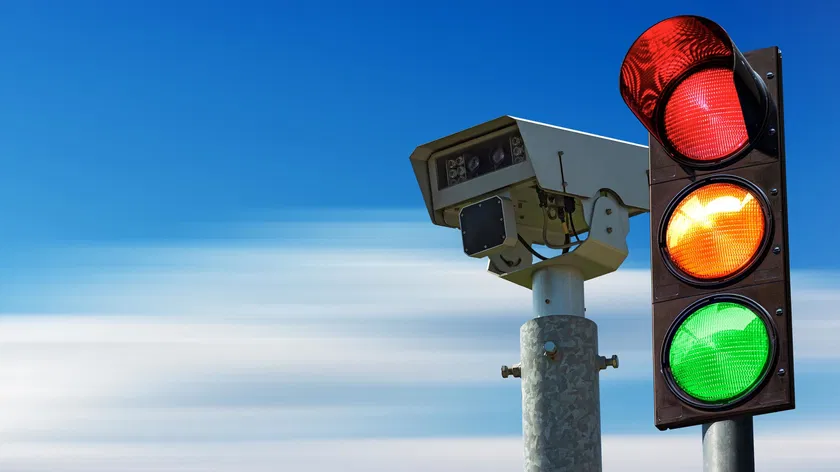
The violation can be detected in various ways: by a police officer during a traffic stop, through automatic speed cameras, or via road surveillance cameras. Once the violation is confirmed, an official report is drawn up and sent to the offender by post or electronically.
Notification and receipt of the report
The alleged offender receives an official notification containing the following elements: a description of the facts, the legal reference of the breached regulation, and the proposed sanction (fine, license suspension, court summons, etc.). It is important to read the notification carefully, as it includes key information on the deadlines to pay or challenge the fine.
Voluntary payment of the fine
For minor or moderate infractions, the law allows for the voluntary payment of the fine within a specified period. By doing so, the procedure is closed without a trial, and the offender acknowledges the violation and waives the right to challenge it. This mechanism allows for a quick resolution of the case, but it is only recommended if you do not wish to dispute the charge.
Challenging the violation
The recipient of the report can contest the violation within 15 days of receiving the notification by submitting a formal complaint. Depending on the case, the file will be referred to the Police Court, which is competent to decide on the legality of the violation and the sanction imposed.
💡 Legal advice: The objection must be properly substantiated and, if possible, supported by evidence (e.g., radar error, lack of road signs, force majeure, etc.).
Most common grounds: Procedural errors in the report, misidentification of the driver, lack of evidence or incorrect images, uncalibrated or illegally placed radar.
Hearing before the police court
In case of an objection or when it involves a serious traffic offense in Belgium (such as driving under the influence of alcohol or repeat offenses), the case is brought before the Police Court. There:
- The offender can present their defense in person or through a lawyer
- The judge hears the arguments and delivers a judgment
- Depending on the case, the fine may be upheld, reduced, or the driver may even be acquitted
💡 Professional recommendation: Whenever there is doubt about the legality of the sanction, especially in complex or repeat cases, it is advisable to seek specialized legal advice. A lawyer can analyze the case file, identify possible irregularities, and effectively represent you in court.
Judicial decision and sanctions imposed for traffic violations in Belgium
When a traffic offense in Belgium is challenged before the Police Court, the court will evaluate all the evidence presented and issue a reasoned decision. The judicial outcome will depend on the seriousness of the conduct, the driver’s record, and other elements of the case.
Possible outcomes of the trial
After the hearing, the judge may choose among several resolutions:
- Acquittal: If the court finds there is insufficient evidence or that the offense was not committed, the accused is cleared of any sanction.
- Suspension of judgment: The judge may decide not to impose any penalty, simply recording the offense without immediate legal consequences.
- Conviction with suspension: A sanction is imposed, but its enforcement is suspended, usually under certain conditions.
- Financial fine: This is the most common penalty and varies according to the degree of the offense.
- Driving license withdrawal: This may be temporary or permanent, especially in cases of repeat offenses or serious threats to road safety.
- Community service: Instead of prison or a fine, the court may impose this alternative measure.
In the case of traffic accidents in Belgium, see our article to learn more about compensation, bodily injuries, and related matters.
Right to appeal
In certain cases, if the convicted party disagrees with the decision, an appeal can be filed before a higher court. It is important to act within the legal deadlines and with the assistance of a lawyer specialized in traffic offenses in Belgium.
Are these sanctions recorded in your criminal record?
Yes. Sanctions imposed for traffic offenses may be recorded in the driver’s criminal record. However, under Belgian law:
- Sanctions automatically disappear from the criminal record after three years, provided they do not involve driving bans longer than that period.
- In the case of license withdrawals exceeding three years, the effect on the criminal record lasts until the sanction has been fully served.
This aspect is important, as it can affect the issuance of certain certificates, permits, or employment opportunities.
What happens if I don’t pay a fine?
Failing to pay a traffic fine in Belgium can lead to consequences such as:
- Increase of the amount due to late payment interest.
- Withdrawal of your driving license.
- Summons before the Police Court.
- Difficulties renewing your insurance or carrying out administrative procedures.
Traffic fines for foreign drivers in Belgium
Fines also apply to vehicles with foreign license plates, and Belgium has effective mechanisms to ensure they reach the offender — even if they have already left the country.
Application of the European Directive on cross-border enforcement of traffic rules
Since the entry into force of Directive (EU) 2015/413 on cross-border enforcement of traffic rules, Belgium is authorized to exchange information with other EU countries. Thanks to this directive:
- Belgian authorities can identify the owner of a foreign vehicle through its license plate.
- The vehicle owner will receive a fine notification in their official language, sent by post to their country of residence.
- This directive applies to 8 types of offenses, including speeding, not wearing a seatbelt, running a red light, and driving under the influence of alcohol or drugs.
Can a tourist receive a traffic fine in Belgium?
Yes. Temporary drivers or tourists traveling in Belgium are subject to the same Road Code rules as residents.
If you commit a traffic violation in Belgium (e.g., speeding detected by an automatic radar), you will receive the fine by mail in your country of origin. In some cases, if the violation is detected by police on the spot, you may be asked to pay immediately, in cash or by card — especially if you have no legal address in Belgium.
Is it mandatory to pay a Belgian traffic fine if I’m a foreigner?
Yes. Ignoring a Belgian fine as a foreigner does not exempt you from responsibility. Authorities may:
- Initiate legal proceedings in your home country, under treaties of mutual legal assistance or reciprocal enforcement of penalties.
- Restrict your entry or circulation in Belgium if you reoffend or accumulate unpaid fines.
- In serious or repeated cases, your case may lead to a European collection order, enforceable by tax authorities in your country.
What happens if I don’t pay a fine after returning to my country?
Ignoring a traffic fine from Belgium can result in:
- Surcharges and late payment interest that significantly increase the original amount.
- Seizure of assets or bank accounts in some cooperating countries if the fine is brought to court.
- Temporary disqualification from driving in Belgium, in serious cases.
- Difficulties renting vehicles, as some rental agencies consult sanction records.
How to check if you have an outstanding traffic fine in Belgium
If you suspect that you may have a pending traffic violation in Belgium or simply want to ensure you have no unpaid fines, the Belgian government provides several quick and secure ways to check the status of your penalties.
Online check via MyMinfin.be
The most direct and effective way to verify if you have any outstanding traffic fines in Belgium is by accessing the official MyMinfin.be portal, managed by the Federal Public Service (FPS) Finance. This platform centralizes tax and administrative information, including traffic violations detected by automatic radars or police officers.
What if you don’t have a Belgian eID or residence?
If you’re a foreigner or don’t have electronic identification means, you can:
- Contact the Federal Traffic Police or local Public Prosecutor’s Office, providing your license plate number and vehicle documents.
- Check your postal mail (each fine is accompanied by a case number and payment details).
- Call the FPS Justice or FPS Finance contact centers, where they can verify if there’s an open file linked to your name or license plate.
Need legal help with traffic violations in Belgium? Here’s how we work
Have you commit traffic violations in Belgium and don’t know what to do? At Arthur & Marin, we understand that receiving a fine can cause confusion, stress, and unexpected legal consequences. Our legal team specializes in Belgian and European traffic law, and we guide you through every step of the process:
- Initial analysis: We review the fine and assess your legal options.
- Personalized defense strategy: We tailor a plan based on the severity of the sanction and your situation (resident, tourist, professional driver, etc.).
- Representation before the Police Court: We defend your rights in court and seek to reduce or cancel the penalty.
- Follow-up: We keep you informed about your criminal record status and any future steps to clear your driving history, if applicable.
📩 Contact us today at info@arthurmarin.com or call +32 465 345 345.
💡 Your defense starts with the right legal strategy.