If you want to understand how to obtain Belgian nationality and access the rights that come with European citizenship, we are here to help you. Since the reform of the Belgian Nationality Code that entered into force on 1 January 2013, the system is now based mainly on the nationality declaration. The second route, naturalisation, is reserved for exceptional cases of particular importance to the Belgian State, such as individuals with extraordinary merits or stateless persons.
To make everything easier to understand, this guide explains all the available routes, the requirements, the documents you will need, and the practical aspects that usually determine whether an application is accepted. It also includes professional advice and warnings about common mistakes, helping you prepare a strong and compliant application file.
Ways to obtain Belgian nationality
The Belgian Nationality Code establishes two main mechanisms through which a foreign person can acquire Belgian nationality. Below, we explain both routes, as well as their requirements and advantages.
Declaration of nationality (most common route)
The declaration of nationality is currently the most usual way to obtain Belgian nationality. If you meet certain legal requirements—such as having lived in Belgium for a specified period, demonstrating social and economic integration, and proving a basic knowledge of one of the national languages—you can apply for it at your municipality.
Since the 2013 reform, the law states that the declaration functions as a right. However, this does not imply that the process is automatic, as it is essential to submit a complete and well-documented file. Any lack of evidence can lead to negative observations from the Public Prosecutor’s Office and even a rejection of the application. Within this route, there are five different categories of applicants, each with specific requirements:
- People born in Belgium
- Legal residents for 5 years
- People married to a Belgian or with Belgian children
- People of retirement age or those with a disability
- Residents with 10 years of legal residency
We will analyze each of these categories in detail later.
Naturalisation (the exceptional route)
Naturalisation is the second way to obtain Belgian nationality and is only granted in exceptional situations. Following the reform of the Nationality Code, only people who have demonstrated extraordinary merit for Belgium, for example in the scientific, sporting, cultural, or public interest fields, or stateless persons (in accordance with international regulations), can access it.
Unlike the declaration of nationality, naturalisation is not a right. Its granting depends on the discretionary decision of the Belgian Parliament, which evaluates case-by-case whether there is a particular interest in granting the nationality. For this reason, it is a route that only affects a very small number of people and is usually not the best option for most foreign residents seeking to acquire Belgian citizenship.
Requirements for the declaration of Belgian nationality
The declaration of nationality is the most common way to obtain Belgian nationality. To apply for it, the law outlines five different scenarios, each with its own specific requirements. Therefore, it is important to identify which category you fit into and what documents you need to submit. Below is an explanation of two of these categories, along with advice that can help you during the process.
Foreigners born in Belgium
This category is for people born in Belgium who wish to apply for nationality upon reaching the age of majority. To do this, they must prove that they have resided in the country uninterruptedly since birth and hold a permanent residence permit. If there were minor absences from the country—such as trips, vacations, or family visits—it is advisable to provide justification for them. The usual documents required often include proof of the residence permit, a birth certificate, and residency certificates since birth.
💡 Tip: If you were away for a few days or weeks (vacation, study, health…), keep any supporting evidence. This helps prove that your residency remains continuous.
Foreigners with 5 years of legal residency
This is the most common route for obtaining Belgian nationality. It requires having lived legally in Belgium for five consecutive years, demonstrating basic knowledge of one of the national languages (A2 level), proving social integration, and also establishing economic integration. In practice, this is done through residency certificates, training documents, pay slips, or proof of self-employment.
Municipalities may request additional evidence if they feel that integration is not sufficiently documented. For this reason, it is beneficial to keep all employment, study, or course documents from those five years. This allows you to submit a strong, consistent, and easily verifiable file to the authorities.
💡 Tip: Save your residency certificates and pay slips every year. This will make the process easier when you apply for nationality.
Table | Requirements for obtaining Belgian nationality after 5 years of residence
| Section | Details |
|---|---|
| Requirements | Having lived in Belgium for 5 consecutive years Demonstrating A2 level in French, Dutch or German Proving social integration (studies, training or courses completed in Belgium) Proving economic integration through employment or self-employment |
| Common documents | Certificate of residence Diplomas or training certificates Payslips or ONSS documents (employees) / INASTI documents (self-employed) |
| Administration | Some municipalities request additional supporting documents, even if the applicant is employed, to verify that social and economic integration is sufficiently proven. |
Foreigners married to a Belgian or parents of a Belgian child
This category does not require applicants to prove economic integration. The aim is to make it easier to acquire nationality for those with a direct family link to Belgian citizens. In the case of marriage, it is necessary to prove that the couple has genuinely cohabited (lived together) for at least three years. The administration often pays close attention to whether the couple is truly living together, so providing documents such as residency registrations (empadronamientos), rental contracts, or joint insurance policies can make a difference. For parents of a Belgian child, it is necessary to prove the family link and the nationality of the minor.
💡 Tip: Provide documents that prove your joint life: a joint rental contract, household bills, insurance policies, medical or school certificates in the case of children, etc.
Applicants of retirement age or with a disability
This category is aimed at people who, due to their personal situation, are exempt from some usual requirements (such as language knowledge or social and economic integration). It is necessary to prove that the person is of retirement age or has an officially recognized disability. The administration is often demanding regarding the origin of the documents, especially in the case of medical certificates issued abroad. In these cases, it may be necessary to present sworn translations or legalizations for them to be accepted.
💡 Tip: Make sure the medical certificate is up-to-date and issued by a recognized authority.
Foreign nationals with 10 years of legal residence
The last category allows applicants to request Belgian nationality after ten years of continuous legal residence in the country. Unlike the 5-year category, there is no requirement to prove economic integration, but applicants must provide documented evidence of real participation in Belgium’s social, cultural, or economic life.
The administration values activities such as volunteering, training courses, studies completed in Belgium, or stable employment. For example, submitting diplomas or employment certificates demonstrates the applicant’s integration and helps the authorities reach a positive assessment.
Summary table | Belgian nationality after 10 years of residence
| section | details |
|---|---|
| Requirements | 10 years of continuous legal residence in Belgium A2 language level Proof of participation in the country’s social, cultural or economic life |
| Common documents | Certificates of residence Evidence of volunteer work Training certificates (Actiris, VDAB, FOREM) Employment documents or cultural activity records |
| Administrative assessment | Participation in society must be properly documented. |
| Practical tip | Volunteer certificates, official course diplomas and a stable employment record are usually well-received by the administration. |
Language proficiency requirement for obtaining Belgian nationality (minimum A2 level)
To obtain Belgian nationality through the declaration procedure, one of the essential requirements is demonstrating language proficiency in one of the three national languages: French, Dutch or German. The law requires a minimum A2 level, according to the Common European Framework of Reference for Languages (CEFR). The legislation allows different ways of proving this, as long as they are supported by official documentation.
How can I prove A2 level to obtain Belgian nationality?
The A2 level can be demonstrated in several ways, and the administration mainly accepts three types of documents.
First, diplomas or certificates obtained in Belgium are valid, whether they come from general studies, vocational training, or official courses. Any diploma issued by a recognised educational institution usually includes automatic validation of the required language level.
Second, integration course certificates are also accepted. Centres such as Actiris, VDAB, FOREM, Inburgering, or regional integration programmes issue certificates that include a language module recognised by the administration. Finally, if the applicant does not have Belgian diplomas or integration course certificates, they may present an officially recognised language test, such as exams from the Alliance Française, the Goethe Institut, or official language schools in Belgium. Although the required level is A2, documents certifying higher levels (B1, B2 or C1) are also accepted.
💡 Municipalities usually verify that the certificate is issued by an official institution, includes the date, the level obtained and the language assessed. The administration also requires the certificate to be written in the language of the region.
Professional tips for the language requirement
First, if you have a diploma from studies completed in Belgium, this is the strongest document, and it almost never leads to rejection. Second, if you attend an integration course, always keep the final certificate. Lastly, if you need to take a language exam, choose recognised institutions such as the Alliance Française, the Goethe Institut or the official regional language schools, as their certifications are accepted by the administration. And finally, if your documents were issued abroad, make sure they clearly indicate the CEFR level.
Economic integration requirement for obtaining Belgian nationality
As explained earlier, economic integration is required to obtain Belgian nationality through the declaration procedure, especially for those applying under the route of five years of legal residence. Its purpose is to show that the applicant has had active and stable participation in the country’s working life. However, the law provides important exceptions: this requirement does not apply to people married to a Belgian citizen, parents of a Belgian child, or individuals with a recognised disability. For all other applicants, it is necessary to prove that they have worked in Belgium for a minimum period or have carried out an economic activity on a continuous basis.
How can I prove economic integration?
There are two main ways to demonstrate economic integration to the Belgian administration. The first is by showing that the applicant has worked as an employee for at least 468 days during the last five years. These days may be continuous or accumulated and are counted according to official social security records. It is not necessary for the employment to have been under the same contract or with the same employer; it is enough to reach the required total number of registered working days.
The second way is by proving that the applicant has carried out an activity as a self-employed person and paid social security contributions for at least eighteen months within the last five years. In this situation, the administration may request statements to verify the contribution periods.
Documents accepted by the administration
To prove economic integration, the administration accepts official documents issued by the Belgian social security bodies. For employees, the most common document is an ONSS certificate, which lists all the registered working days within the reference period. Payslips or employment contracts may also be submitted. For self-employed applicants, the required documents must be issued by INASTI or by their social insurance fund, showing the contributions paid and the periods of economic activity.
💡 The administration may request additional documentation in cases of part-time work, periods of incapacity, discontinuous contracts or other irregular employment situations.
Practical advice based on experience
It is advisable to keep all payslips, contracts and employment certificates from your very first year of residence. It is also important to check your contribution record with ONSS or INASTI, as an administrative mistake can delay the file or even lead to a negative decision. For self-employed people, contributions must be fully up to date, as delays or outstanding payments can create complications even when the applicant meets the required months of activity.
💡Tip: Good organisation of documents and a careful review of your employment situation make it possible to submit a complete application, which increases the likelihood of receiving a favourable opinion from the Public Prosecutor.
Procedure for the declaration of nationality | step-by-step
Once you have the documents and meet the requirements, it is time to officially submit the nationality application. Below is an explanation of how the procedure works step-by-step and what the applicant can expect at each stage.
Submission of the application at the municipality (Commune)
The first step is to go to the municipality where you are registered. There, you will need to submit your application and pay the mandatory fee of 150 euros. The municipality will review the documentation to check that nothing important is missing. If they find any errors, they will allow you to correct them.
Administrative review and sending the file to the public prosecutor’s office
If the file is complete, the municipality sends it to the Public Prosecutor’s Office (Parquet). During this review, the municipality checks elements such as the continuity of residence, the validity of the certificates, and the general coherence of the documentation. If it detects errors or incomplete documents, it may request corrections before sending the file.
Evaluation by the public prosecutor’s office within a maximum of four months
Once the file is received, the Public Prosecutor’s Office has a period of four months to analyze the application and issue an opinion (favorable or unfavorable). The Public Prosecutor’s Office will verify whether the applicant meets all the requirements, especially those related to residency, integration, language, and economic integration. If the Public Prosecutor’s Office detects any irregularity or considers that a requirement is not properly documented, it may issue a negative opinion, which will prevent you from obtaining Belgian nationality.
Appeal to the court of appeal in case of rejection
If the Public Prosecutor’s Office issues a negative opinion, the applicant has the right to file an appeal with the Court of Appeal. The deadline for appeal is only 15 days from notification. The Court of Appeal reviews the file, analyzes the applicant’s arguments, and decides whether or not to grant nationality. In certain cases, the court may overturn the negative opinion.
Total duration of the procedure
In general terms, the complete procedure usually takes between five and seven and a half months, although there may be variations between Municipalities. Cities with a higher volume of applications, such as Brussels, Antwerp, or Liege, may have slightly longer processing times.
💡 Tip: It is advisable to organize the file clearly, check all dates, and consult with a lawyer before submitting the application.
This table is designed to help expats, international residents, and long-term migrants understand their eligibility for Belgian nationality through declaration.
Frequent errors that delay or block Belgian nationality
Below are the most frequent errors that lead to observations, delays, or rejections in the declaration of Belgian nationality application.
Outdated or unrecognized certificates
One of the most common reasons for delay is submitting certificates that are no longer valid. Many documents, such as the certificate of residency or the certificate of family composition, usually have a limited validity period. This delays the procedure, so checking the dates before submitting the application helps avoid this problem.
Failure to prove continuous residency
Unreported changes of address, long unjustified absences, or inconsistencies between certificates can lead to the rejection of the application. Therefore, it is necessary to provide the required evidence and offer the necessary explanations.
Poorly documented economic integration
Another very common error is not correctly proving the days worked or the months of self-employment activity. The law requires 468 days worked in the last five years, or 18 months of self-employment with paid contributions. If any month of contribution is missing, if there was a short, undeclared contract, or if there is a debt with ONSS or INASTI, the Public Prosecutor’s Office may issue a negative opinion.
Inconsistencies between documents in the file
Inconsistencies between documents usually appear when addresses do not match, dates do not line up, or there are errors in sworn translations. Even if the applicant meets all requirements, any contradiction forces the municipality or the Public Prosecutor’s Office to ask for clarification, which delays the entire procedure.
💡 You must check that all documents have no inconsistencies (same address, same dates, and data correctly translated).
Failure to respond to the municipality or the public prosecutor’s office on time
Sometimes the administration asks for additional documents or clarifications. If the applicant does not respond quickly or does not submit the correct information, the file can be stalled for weeks or even months. It is important to respond in writing, keep a copy, and submit what is requested within the established deadlines.
How to obtain dual Belgian nationality?
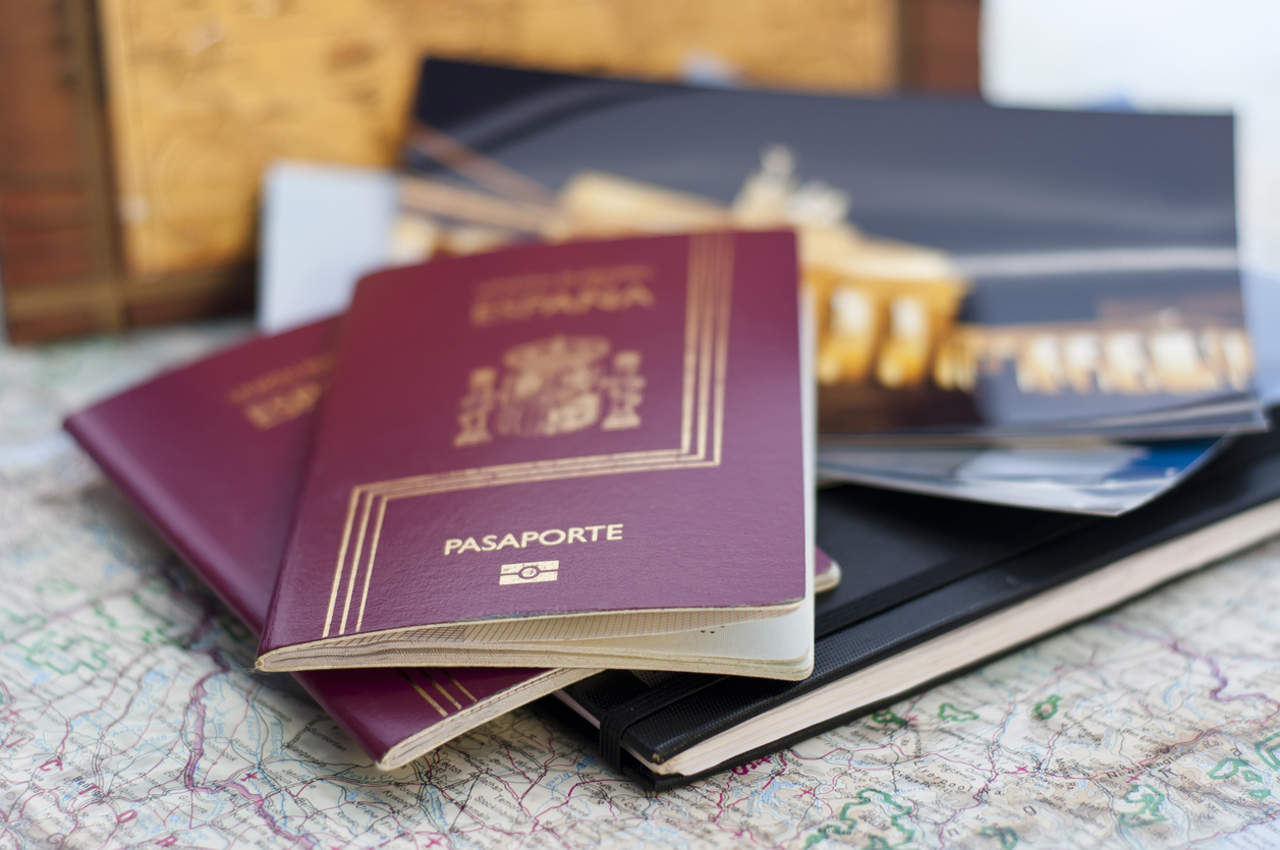
Belgium permits dual nationality in certain cases, allowing you to retain your original citizenship when you become a Belgian citizen. However, it is important to note that not all countries allow dual citizenship. For example, if you are a Spanish citizen residing in Belgium, it is advisable to consult the specific regulations for Spaniards. You can find more detailed information in our guide for Spaniards in Belgium.
Dual nationality offers several advantages, such as access to social benefits and services in both countries, the right to work legally in more than one country without restrictions, and greater ease and freedom to travel and reside in either nation. However, it also entails certain responsibilities, such as complying with tax obligations in both countries or potential military service.
Which other nationalities can be held alongside Belgian?
The countries that allow dual nationality with Belgium, without requiring you to give up your original one, include: Spain, France, Italy, Portugal, Germany, the Netherlands (with exceptions), the United Kingdom, Switzerland, the United States, Canada, Brazil, Argentina, Mexico, Chile, Colombia, Morocco, Turkey, Australia, the Philippines, and many others. In general, most countries in Western Europe and the Americas allow dual nationality. Some examples of countries that do not allow or limit dual nationality, meaning obtaining Belgian citizenship would imply losing the original one, are China, India, Japan, Norway, and Austria.
Refugees and Belgian citizenship
Individuals recognized as refugees in Belgium can apply for Belgian nationality just like any other resident, normally after five years of continuous legal residency. The main particularity is that, if they cannot obtain documents from their country of origin for safety reasons, Belgium allows them to present alternative proof or official declarations. They are not required to renounce their original nationality, and refugees must meet the requirements for language, social, and economic integration. Ultimately, refugees have access to Belgian citizenship under similar conditions to other applicants, but with additional guarantees to protect those who cannot contact their home country.
Success stories and clients who obtained their Belgian nationality
We have assisted numerous clients in Belgium on their path to obtaining Belgian citizenship. Every file is different, which is why we work in a personalized way to increase the chances of success. Here are some real cases that reflect our work.
Case 1 | English engineer in Brussels
He had been working in Belgium for five years, but his file presented a problem. Several periods were not correctly declared by previous employers, and there were doubts about the continuity of his residence. After analyzing his history, we reconstructed his professional trajectory using certificates, Dimona extracts, and official declarations. His nationality was approved in 4 months without additional requirements.
Case 2 | Refugee with documentary difficulties
As a recognized refugee, he could not obtain certain documents from his country. We prepared a file with alternative proof of identity, certificates, and declarations. Thanks to this, the file was validated, and he acquired Belgian nationality securely.
Case 3 | Italo-colombian couple with irregular income
Both worked as self-employed, with variable income and activities carried out between Brussels and Antwerp. We helped them present an economic history, justifying stable income through bank statements, invoicing, and tax declarations. They obtained nationality simultaneously after 6 months.
Case 4 | Previous rejection file
The applicant had received a rejection due to a lack of proof of social integration. After reviewing their file, we identified the missing elements (French courses, participation in community activities, and incomplete employment documentation). We reorganized the entire file, added new certifications, and submitted a formal appeal. The Municipality approved their citizenship on the second attempt.
Ready to obtain Belgian nationality? Let us help you
Ready to access a Belgian passport, full freedom of movement within the EU, social benefits and unrestricted work in 27 countries? At Arthur & Marin, we guide our clients through the process of acquiring Belgian nationality by declaration, naturalisation or double nationality, and we provide the professional advice needed to ensure a successful outcome. Our team evaluates your case based on legal residence, supporting evidence and dual citizenship rules. We help you speed up the process, check whether you meet the requirements before starting the application, prepare all documents, build a strong economic integration file and resolve any underlying issues such as lost documents, interrupted residence periods or doubts about eligibility.
Contact us to schedule a consultation by writing to info@arthurmarin.com or calling +32 465 345 345. Let’s turn your goal of becoming Belgian into a reality.
💡 Leave it in the hands of specialists. Turn your life project in Belgium into a reality.